

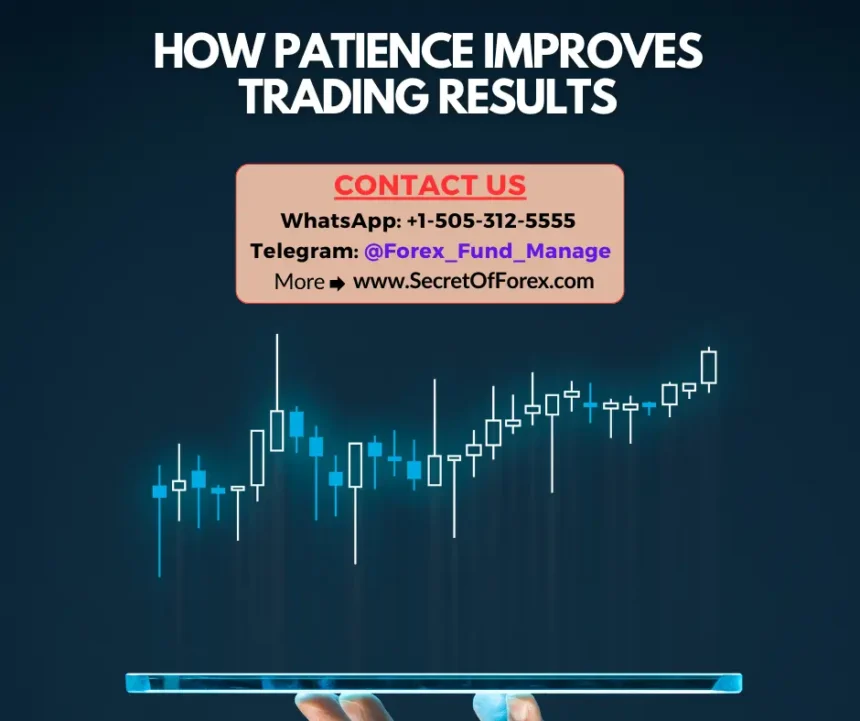
I used to think trading was about speed. Fast entries. Fast exits. Quick decisions. React before the candle closes. Catch the move before everyone else. That adrenaline — it feels productive, doesn’t it? Like you’re doing something important. How Patience Improves Trading Results
But here’s the uncomfortable truth most traders learn the hard way: the market doesn’t reward activity. It rewards patience.
And those two are not the same thing.
The Illusion of Constant Action – How Patience Improves Trading Results
When you first start trading, sitting on your hands feels wrong. You open your platform, charts are moving, candles are forming, news is ticking across the screen — surely there’s something to trade.
So you click.
Not because your setup is perfect. Not because your edge is screaming at you. But because doing nothing feels like missing out.
I’ve been there. Most serious traders have. You convince yourself that small, mediocre setups are “good enough.” Over time, those “good enough” trades quietly chip away at your account and, more dangerously, your confidence.
Patience, on the other hand, forces selectivity.
And selectivity is where trading results begin to change.
More Read

Waiting for the Right Setup
Strong trading results aren’t built on dozens of trades a week. They’re built on a handful of high-quality decisions.
Think about that for a moment.
If your strategy historically works best under very specific conditions — certain volatility levels, clear structure breaks, alignment with higher time frames — then why would you trade when those conditions aren’t present?
Impatience makes you compromise your criteria.
Patience makes you protect them.
When you wait for price to reach your level instead of chasing it, you improve your entry. When you let a candle close before confirming a breakout, you avoid false signals. When you allow the market to retrace instead of jumping in mid-move, your risk-to-reward ratio improves almost naturally.
The trade doesn’t feel forced. It feels obvious.
And obvious trades tend to perform better.
Patience Reduces Emotional Trading
Here’s something most people don’t talk about enough: patience stabilizes your psychology.
When you’re patient, you’re operating from a position of control. You’ve already accepted that opportunities will come — maybe not this hour, maybe not today — but they will.
Impatience, on the other hand, is rooted in scarcity. You feel like this might be your only chance. That if you don’t take this trade, you’ll miss the move of the week.
That mindset leads to revenge trading. Overtrading. Increasing position sizes to “make it back.” Sound familiar?
Patience slows that spiral down.
You start thinking in probabilities instead of impulses. You accept that one missed trade means nothing in the context of hundreds. Suddenly, your trading results improve not because your strategy changed, but because your behavior did.
Letting Trades Develop
Patience doesn’t end at entry.
In fact, that’s where it really gets tested.
You enter a solid setup. Price moves slightly in your favor — then stalls. Maybe it pulls back a bit. You feel the urge to close early and lock in a small profit.
Or worse, price retraces toward your stop loss and fear creeps in. You start second-guessing analysis that made perfect sense fifteen minutes ago.
Patience means trusting your plan.
If your stop loss and take profit were placed logically, based on structure or volatility, then micromanaging the trade often does more harm than good. Markets breathe. They move in waves. Expecting immediate continuation is unrealistic.
Some of the best trades I’ve ever taken were uncomfortable for a while. They tested conviction before rewarding it.
That waiting period — that silence between entry and outcome — is where patience earns its keep.
The Compounding Effect of Fewer, Better Trades – How Patience Improves Trading Results
Here’s something that surprises newer traders: reducing trade frequency often improves overall performance.
When you take fewer trades, you reduce transaction costs. You avoid marginal setups. You preserve mental energy. You review decisions more carefully.
Your equity curve starts to smooth out.
Instead of wild swings driven by overexposure, you see steadier progress. Losses still happen — they always will — but they feel controlled. Planned. Contained.
Over months, this approach compounds. Small improvements in trade quality produce noticeable improvements in trading results.
And it all starts with waiting.
Patience as a Competitive Advantage
Most market participants lack patience. Retail traders chase. Institutions wait for liquidity. Experienced traders sit quietly until price comes to them.
Which side would you rather be on?
Patience creates asymmetry. While others react emotionally, you respond strategically. While they exhaust themselves with constant entries, you conserve capital and focus.
There’s power in that restraint.
It doesn’t look flashy. It won’t give you daily excitement. In fact, at times it feels almost dull.
But trading isn’t about entertainment. It’s about longevity.
The longer you stay disciplined, the more your edge has time to play out. And the more your edge plays out, the more consistent your results become.
So if you’re looking to improve your trading performance, don’t start by searching for a new indicator. Start by asking a harder question:
Are you truly willing to wait?
Because patience doesn’t just improve trading results — it transforms the way you experience the market altogether.