


Most traders spend their first two years staring at a screen cluttered with so many lagging indicators that they can’t actually see the price. They’ve got MACD crossing over here, an RSI showing “oversold” there, and a cloud of Bollinger Bands suffocating the candles. It’s a mess. I’ve been there, and I can tell you from experience: the more you add to your chart, the further you get from the truth. Forex Price Action Techniques to Improve Your Trading
The truth is the price. Everything else is just a derivative of it.
If you want to survive the forex market, you have to learn to read the raw data. Price action isn’t a “strategy” in the way a crossover system is. It’s a language. It’s the collective footprint of every central bank, hedge fund, and retail gambler on the planet. To trade it well, you need to stop looking for signals and start looking for stories.
The Psychology Behind the Wick – Forex Price Action Techniques to Improve Your Trading
Every candlestick tells a story of a struggle. Most beginners look at a candle and see “up” or “down.” That’s too simple. You need to look at the wicks.
A long wick on the top of a candle isn’t just a line; it’s a rejection. It shows that buyers tried to push the market higher, but they ran into a wall of sellers who pushed them right back down. When you see this happen at a key level, it’s a massive red flag for anyone long. It’s a sign that the momentum has shifted.
I don’t care if your favorite indicator says the trend is strong. If I see a massive rejection wick on a four-hour chart at a major resistance zone, I’m looking for the exit. The price is telling you that the big players are no longer interested in higher prices. Ignore that at your own peril.
Zones, Not Lines
One of the biggest mistakes I see general traders make is drawing support and resistance lines with surgical precision. They’ll draw a line at 1.1250 and expect the market to bounce exactly there. The market doesn’t work that way.
More Read

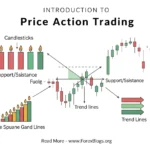
The market is messy. It’s a human environment. Instead of thin lines, think in terms of “zones.” These are areas where price has historically stalled or reversed. I like to call them points of interest.
When price approaches one of these zones, I’m not just blindly clicking “sell” or “buy.” I’m waiting to see how the price reacts. Does it slice through the zone like a hot knife through butter? Or does it start to stutter? Look for small, indecisive candles. That’s the sound of a trend losing its breath. When the trend gets tired at a major zone, that’s when you strike.
The Power of the False Breakout
If you want to understand how the pros take money from the amateurs, you need to study the false breakout. This is probably the most powerful price action tool in my kit.
Retail traders are taught to “buy the breakout.” They see a resistance level, they see price break above it, and they jump in. The problem? Large institutional players need liquidity to fill their massive sell orders. They know exactly where those retail buy stops are sitting. They’ll often push the price just far enough above a level to trigger all those buy orders, only to immediately dump their positions.
The result is a “trap.” Price pops up, then slams back down below the level. If you can learn to spot these traps—where the price fails to hold a new high—you’ve found one of the highest-probability trades in forex. It’s not about being right; it’s about recognizing when everyone else is wrong.
Context is Everything
A pin bar or an engulfing candle means nothing in a vacuum. I don’t trade every single candle pattern I see. If you did that, you’d be broke by the end of the week.
You have to look at the market structure. Is the market making higher highs and higher lows? Or is it ranging? A bearish reversal pattern in a strong uptrend is usually just a trap for sellers. However, that same bearish pattern at the top of a multi-month range? That’s gold.
I look for confluence. I want to see:
- A major price zone.
- A clear rejection candle (like a pin bar).
- A shift in lower-timeframe momentum.
When those three things align, I don’t need a dozen indicators to tell me what to do. The chart is screaming it.
Keep Your Chart Clean – Forex Price Action Techniques to Improve Your Trading
My best advice is to strip everything off your charts for a week. No moving averages, no oscillators, nothing. Just the bars. It’ll feel like you’re flying blind at first. But eventually, you’ll start to see the rhythm. You’ll see the way price “breathes”—expanding rapidly and then contracting back to a mean.
Professional trading isn’t about finding a magic formula. It’s about developing the discipline to wait for the market to reveal its hand. Price action allows you to do that. It puts you on the side of the people who actually move the market, rather than the people who are just reacting to what happened ten minutes ago.
It’s not easy, and it takes time to train your eyes. But once you start seeing the market through the lens of price action, you’ll never go back to trading with training wheels again. Don’t overcomplicate it. The price tells you everything you need to know; you just have to be quiet enough to listen.