

Ever stared at a trading chart, watched the price bounce up and down, and thought, “I totally could have made a quick buck there?” You’re definitely not alone. Top Scalping Indicators for Quick Profits
- What is Scalping?
- Step-by-Step Guide: How to Trade Using the Top Scalping Indicators
- Step 1: Set Up Your Exponential Moving Averages (EMAs)
- Step 2: Add the Stochastic Oscillator for Timing
- Step 3: Throw on Bollinger Bands for Breakouts
- Step 4: Keep an Eye on Trading Volume
- Step 5: Execute the Trade and Set Your Exit
- 5 Common Scalping Mistakes to Avoid
- FAQs
- Conclusion
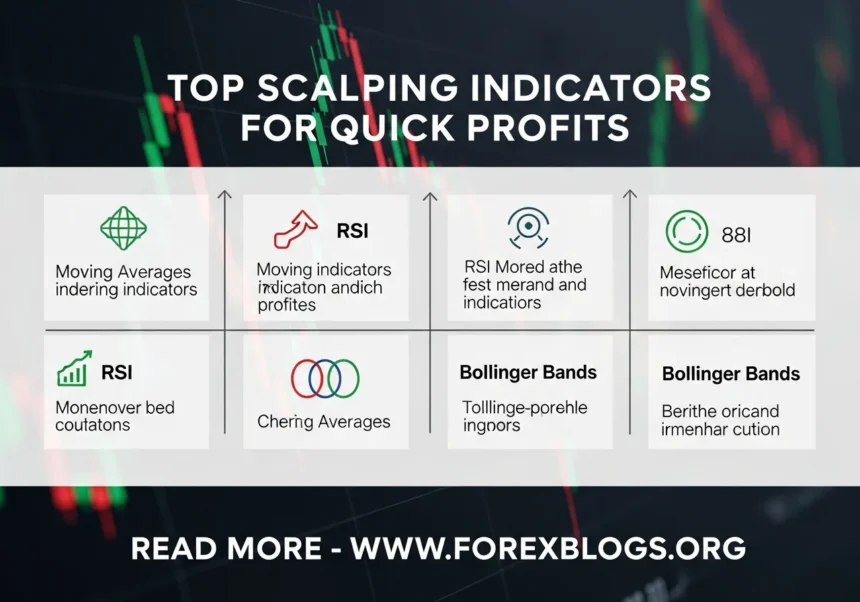
Scalping is all about grabbing those tiny, fast profits, but trying to do it without the right tools is like driving blindfolded. That’s exactly why finding the top scalping indicators is a total game-changer for beginners.
Stick around, and I’ll walk you through the absolute best tools to help you spot those quick setups without pulling your hair out.
What is Scalping?
Let’s keep this super simple. Scalping is a trading style where you buy and sell an asset (like a stock or crypto) within a few minutes, or even seconds.
You aren’t looking to hold onto something for months or ride a massive trend. Instead, you just want to grab a tiny piece of the pie and get out.
Think of it like buying a limited-edition pair of sneakers at a store and selling them to someone waiting outside for a quick $20 profit. You do that ten times a day, and suddenly you’ve got some real cash in your pocket.
But because the market moves so incredibly fast, you can’t just guess when to jump in. That’s where the top scalping indicators come into play.
These indicators are basically little cheat codes on your chart. They process all the messy price data and give you clear signals on when a quick move is about to happen.
Step-by-Step Guide: How to Trade Using the Top Scalping Indicators
You don’t need a messy chart with twenty different lines on it to be successful. In fact, keeping it simple is the real secret to fast trading.
Here is a practical, step-by-step guide to setting up and using the most reliable indicators for your very first scalp trade.
Step 1: Set Up Your Exponential Moving Averages (EMAs)
The EMA is your best friend for figuring out which way the wind is blowing. Unlike regular moving averages, the EMA reacts much faster to recent price changes, making it perfect for quick trades.
Put a 9-period EMA and a 21-period EMA on your chart. The 9 is a fast line, and the 21 is a slower line.
Quick tip: Whenever the 9 crosses above the 21, it’s a sign the price is pushing up. When it crosses below, the price is dropping. Don’t trade against this trend!
Step 2: Add the Stochastic Oscillator for Timing
Now that you know the direction, you need to know exactly when to pull the trigger. The Stochastic Oscillator tells you if a market is “overbought” (too expensive) or “oversold” (too cheap).
It looks like a little squiggly line at the bottom of your screen that moves between 0 and 100.
If the line drops below 20, the asset is oversold. If the trend is up, this is your signal to buy the dip. If it goes above 80, it’s overbought, and it might be time to take your profit and run.
More Read

Step 3: Throw on Bollinger Bands for Breakouts
Bollinger Bands look like a little tunnel wrapped around the price candles. They measure how wild the market is acting.
When the market gets quiet, the bands squeeze tightly together. Think of it like a coiled spring getting ready to pop.
Quick tip: When the price breaks out of a tight Bollinger Band squeeze, it usually moves fast. That’s exactly the kind of momentum a scalper loves to ride.
Step 4: Keep an Eye on Trading Volume
Indicators are great, but volume is the actual fuel behind the market. If you see a buy signal but the volume is super low, it’s probably a fakeout.
You always want to see a tall volume bar right as you enter a trade. It proves that other traders are jumping in with you, pushing the price in your direction.
Step 5: Execute the Trade and Set Your Exit
Wait for everything to line up. Let’s say your EMAs are pointing up, the Stochastic is rising from the bottom, and volume is stepping in.
Hit the buy button, but immediately place a stop-loss just below your entry point.
Since scalping is about quick profits, don’t get greedy. Once you hit a small profit target (like a 1% gain), close the trade. Take your money and wait for the next setup.
5 Common Scalping Mistakes to Avoid
Scalping sounds incredibly fun, and honestly, it is. But because things happen so fast, it’s really easy to make silly mistakes that drain your account.
Here are a few common traps you need to dodge:
1. Ignoring the Spread The spread is the difference between the buy and sell price of an asset, and it’s basically the fee you pay the broker. If you are aiming for a 5-cent profit, but the spread is 3 cents, you’re barely making anything. Always trade highly liquid assets where the spread is super tight.
2. Revenge Trading We all have losing trades. It’s just part of the game. But the worst thing you can do is instantly jump back into a bad trade trying to win your money back. Take a breath, step away from the screen for a minute, and wait for a fresh signal from your indicators.
3. Overcomplicating Your Chart I see so many beginners layering ten different indicators on their screen until it looks like a Jackson Pollock painting. You don’t need that. Stick to two or three top scalping indicators. If your chart is too messy, you’ll hesitate, and in scalping, hesitation costs money.
4. Trading During Dead Hours Scalpers need volatility. If the market is barely moving, you’re just going to sit there paying fees and wasting your time. The best times to scalp are usually the first hour after the market opens and the last hour before it closes.
5. Forgetting Your Stop Loss This is the big one. If you are scalping for tiny profits, you cannot afford to take a massive loss. A stop-loss is an automatic order to sell if the trade goes against you. Use it every single time, no excuses.
FAQs
Which time frame is best for scalping?
Most scalpers stick to very short time frames. The 1-minute and 5-minute charts are the absolute best for this. They give you enough detail to catch small price ripples without making you wait around all day.
Can I scalp with just one indicator?
You can, but it’s a bit risky. Using just one indicator can give you false signals. It’s usually better to pair two together—like a moving average for the trend and an oscillator for the entry timing.
Is scalping too risky for beginners?
It definitely has a steep learning curve because it’s so fast-paced. But you don’t have to risk real money right away. Open a free paper trading (demo) account first. Practice hitting your buttons and reading the indicators until you feel totally comfortable.
Conclusion
Diving into the world of fast-paced trading can feel a little overwhelming at first. But once you get the hang of reading the top scalping indicators, it actually becomes a lot of fun.
Remember, you don’t need to catch every single move the market makes. You just need a few good setups a day to slowly build up your account. Keep your charts clean, manage your risk, and don’t let a bad trade ruin your mood.
Why not pull up a chart right now? Throw a moving average and a stochastic oscillator on there, and just watch how the price reacts. You might be surprised at how quickly you start seeing the patterns!
#ScalpingIndicators #DayTrading #TechnicalAnalysis #ForexTrading #CryptoTrading #TopScalpingIndicators #TradingStrategy #StockMarket #QuickProfits #PriceAction #MarketAnalysis #FinancialFreedom #InvestmentTips #TradingTools #DayTraderLife