

Ever planned a trip abroad, checked the exchange rate, and thought, “Wait, why is my money suddenly worth less today than it was last week?” It’s frustrating, right? The truth is, exchange rates don’t just bounce around by magic or luck. How Central Banks Control Currency Markets
Behind the scenes, powerful institutions called central banks are quietly pulling the levers that dictate exactly what happens in Forex currency markets. If you’re a beginner trying to wrap your head around how currency values change, understanding these financial heavyweights is the absolute best place to start. Let’s break down exactly how they do it, minus all the confusing Wall Street jargon.
What Are Central Banks and How Do They Fit Into Forex Currency Markets?
To put it simply, a central bank is the “boss” of a country’s money. Think of them like the financial referee for a whole nation. They aren’t like the regular bank down the street where you open a checking account or get a car loan.
Their main job isn’t to make a profit. Instead, they try to keep the economy stable, make sure people have jobs, and stop prices from going up too fast. That last part is just a fancy way of saying they fight inflation.
So, how does this tie into Forex currency markets? Well, every time a central bank makes a major decision about their country’s money, it ripples out into the global exchange arena. They control the supply of money, and in any market, supply and demand dictate price.
Let’s look at a real-life example. Imagine you’re at a rare sneaker auction. If the auctioneer suddenly announces they just found 10,000 more pairs of the exact same shoe in the back room, the value of those sneakers drops instantly.
Central banks do something very similar with national money. If the US Federal Reserve decides to pump way more dollars into the economy, the value of the US dollar usually drops compared to the Euro or the British Pound.
There are a few major players you should know about. The US Federal Reserve (the Fed) is the biggest. Then you have the European Central Bank (ECB), the Bank of England (BoE), and the Bank of Japan (BoJ). When these institutions make a move, the whole world pays attention.
A Step-by-Step Guide: How Central Banks Influence Forex Currency Markets
You might be wondering how they actually make these massive changes. They don’t just push a big red button on a desk. They use a few specific tools to control the flow of money. Here is a simple step-by-step look at their playbook.
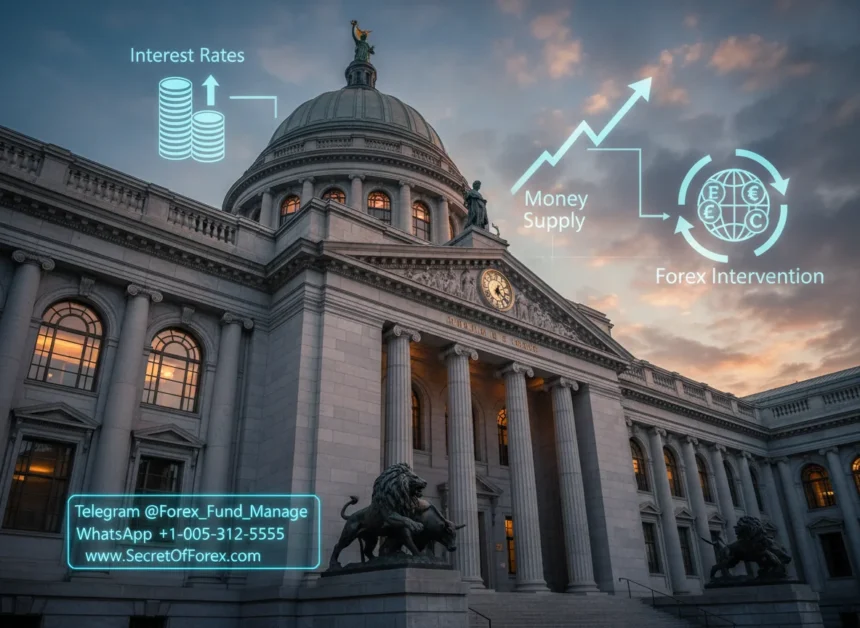
Step 1: Tinkering with Interest Rates This is the absolute biggest tool in a central bank’s toolbox. When a country raises its interest rates, it’s basically offering a better return on investment for anyone holding that currency.
Think of a regular savings account. If one bank offers you 5% interest and another offers 1%, you’ll obviously put your money in the 5% bank. Global investors do the exact same thing with currencies.
When a central bank raises rates, foreign investors rush in to buy that currency so they can earn a higher return. This massive wave of buying pushes the value of the currency up. On the flip side, cutting rates usually makes a currency lose value.
Tip: When you hear on the news that a central bank is “hiking rates,” you can generally expect their currency to get stronger in the short term.
Step 2: Buying and Selling Foreign Reserves (Direct Intervention) Sometimes, a central bank decides their currency is way too weak or way too strong for their liking. When this happens, they can step directly into the market and start buying or selling massive amounts of money.
Let’s say Japan thinks the Yen is getting too expensive. An expensive Yen makes it really hard for Japanese companies like Toyota or Sony to sell their products to other countries affordably.
To fix this, the Bank of Japan might sell billions of Yen to flood the market. Just like the sneaker example earlier, flooding the market with supply brings the price back down to a level they are happy with.
Step 3: Printing Money (Quantitative Easing) Don’t let the term “quantitative easing” scare you. It’s just an overly complicated economic term for creating new money to buy government bonds and pump cash into the system.
More Read

Central banks usually do this when the economy is struggling and dropping interest rates isn’t working anymore. We saw this happen a lot during the 2008 financial crisis and the 2020 pandemic.
When a central bank turns on the money printers, they inject fresh cash straight into the economy. Because there is suddenly a lot more of that currency floating around, its value almost always drops in the global exchange markets.
Step 4: “Jawboning” (Using Their Words) Believe it or not, central bank bosses can move global markets just by giving a speech or holding a press conference. Traders actually call this “jawboning” or forward guidance.
These bankers know that investors analyze every single word they say. If the head of the European Central Bank hints that they might raise interest rates next year, traders won’t wait until next year to act.
They will start buying Euros right away. They want to get in early before the actual change happens. A central bank can literally change the value of their money just by talking about what they plan to do in the future.
Common Mistakes Beginners Make When Tracking Central Bank News
If you’re just starting to watch currency pairs, central bank announcements can feel like a wild rollercoaster. It’s easy to get confused or make the wrong move. Here are a few common traps beginners fall into—and how you can avoid them.
Ignoring the economic calendar Central banks schedule their meetings and announcements months in advance. These dates are public knowledge. If you don’t know when the US Federal Reserve is speaking, you might get caught off guard by a sudden, massive spike in currency prices. Always check a free online economic calendar at the start of your week.
Chasing the initial reaction When a bank announces an interest rate change, the market often freaks out. The price might shoot up in one direction, only to violently reverse five minutes later. This happens because trading algorithms and big banks are scrambling to adjust. Give the dust a chance to settle before making any decisions based on the news.
Misunderstanding “priced in” news This one confuses beginners the most. Sometimes a bank will raise interest rates (which should make the currency go up), but the currency actually drops instead! Why does this happen?
It happens because traders already expected the rate hike and bought the currency weeks ago. We call this “buying the rumor.” When the actual news finally hits, those same traders sell their positions to take their profits, which drives the price down.
Forgetting about inflation reports Central banks care about inflation more than almost anything else. If a country releases a report showing that inflation is super high, you can bet the central bank will step in soon to cool things down (usually by raising rates). Paying attention to inflation numbers gives you a sneak peek into what the central bank will do next.
Focusing only on the US Dollar Yes, the US dollar is the undisputed king of the currency world. It’s involved in the vast majority of global trades. But don’t ignore the other big players. The decisions made by the Bank of Japan or the Reserve Bank of Australia matter just as much for the specific currency pairs they control.
FAQs About Central Banks and Exchange Rates
Who actually owns the central banks? It depends on the specific country, but most of them are independent government agencies. They’re designed to be totally free from day-to-day politics. This independence is crucial so they can make tough financial decisions without worrying about winning the next political election.
How often do these central banks meet? Most major central banks, like the Federal Reserve or the European Central Bank, hold scheduled policy meetings about eight times a year. However, if there’s a massive global crisis happening, they have the power to hold emergency meetings and change rates at a moment’s notice.
Can a central bank completely control its currency? Not entirely. While they have a massive amount of influence, the Forex currency markets trade over seven trillion dollars every single day. Even a wildly powerful central bank can’t fight a massive global market trend forever. They can steer the ship, but they still have to deal with the ocean’s currents.
Conclusion
Trying to figure out the global money system can feel like trying to learn a completely new language. It takes a little time to get the hang of it. But once you understand that central banks are the main drivers behind the wheel, everything starts to make a whole lot more sense.
They use interest rates, money printing, and even just their public speeches to keep their local economies on track. And every single time they pull one of those levers, those ripples create the waves we see in foreign exchange rates.
Next time you see a news headline about the Federal Reserve or the Bank of England, don’t just scroll past it. Take a second to think about how their decisions might shift the value of your money.
What currency trends have you noticed lately in your own travels or reading? Feel free to drop a comment or share your thoughts below!
Related Hashtags
#ForexTrading #CurrencyMarkets #CentralBanks #MonetaryPolicy #ForexAnalysis #FXTrading #EconomicIndicators #InterestRates #MarketTrends #ForexStrategy #GlobalFinance #MacroEconomics #InvestmentStrategy #TradingTips #FinancialMarkets