


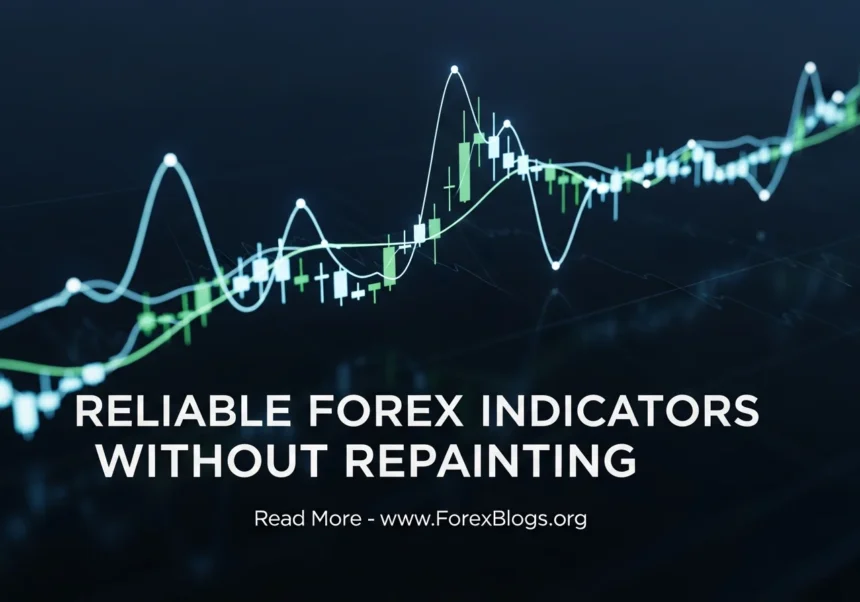
Ever found a trading indicator that looked like absolute magic on your chart, only to lose you money the second you took a live trade? You’re definitely not alone. A lot of new traders fall into the frustrating trap of using tools that secretly change their past signals to look perfectly accurate. Reliable Forex Indicators Without Repainting
It’s incredibly annoying and a quick way to blow your trading account. That’s exactly why finding reliable forex indicators without repainting is such a massive game-changer for beginners. Let’s break down how you can spot the real deal, avoid the scams, and actually start trusting your charts.
What Are Reliable Forex Indicators Without Repainting?
Before we get into the heavy stuff, let’s talk about what “repainting” actually means in the trading world.
Imagine you’re driving in a new city using a GPS map. The screen tells you to turn left, so you confidently take the turn. Suddenly, you hit a dead end. You look back down at the screen, and the GPS has magically erased the “turn left” instruction. Now, it shows that you should have gone straight all along.
That’s exactly what a repainting indicator does on a forex chart. It gives you a buy or sell signal, but if the market goes the opposite way, it shifts the signal backward in time. It recalculates the math to make itself look like it was right from the very beginning.
Sneaky, right? Developers often do this on purpose so they can post screenshots of “perfect” historical charts and sell their indicators to beginners for a quick buck.
So, reliable forex indicators without repainting are simply tools that lock in their signals once a price candle closes. Good or bad, right or wrong, the signal stays exactly where it printed.
For beginners, using honest, non-repainting tools is the only real way to test a trading strategy. If your indicator shifts its arrows or lines after the fact, you’re essentially trading blindfolded. You need tools that tell you the truth, even when the truth is a losing trade.
Step-by-Step Guide to Trading with Reliable Forex Indicators Without Repainting
Let’s get practical. How do you actually find and use these honest tools without getting tricked? Here is a simple, straightforward roadmap to help you set up your charts the right way.
1. Stick to the classic, built-in indicators When you first open trading platforms like MetaTrader 4 or TradingView, you’ll see a big list of default tools. The good news? Almost all of these are reliable forex indicators without repainting.
Tools like the Simple Moving Average (SMA), Relative Strength Index (RSI), and the MACD are safe, time-tested bets. They calculate their data based on closed prices, meaning they won’t magically move an old signal just because the market suddenly tanked.
Tip: If an indicator has a crazy name, promises “99% accuracy,” and costs $50 on a random internet forum, there is a high chance it repaints. Stick to the boring but reliable stuff first.
2. Test your tools on a live demo chart The easiest way to catch a sneaky repainter is to watch it work in real-time. Boot up a free demo trading account and drop your new indicator on a fast timeframe, like the 1-minute chart.
Wait for a buy or sell signal to appear. Now, just sit back and watch what happens when the next few candles move in the opposite direction of your signal.
Did the arrow disappear? Did the trend line shift backward to a different candle? If yes, trash it immediately. A truly reliable indicator will keep its signal exactly where it printed, regardless of what the market does next.
More Read

3. Always wait for the candle to close This is a huge rookie mistake that trips up almost everyone. Even reliable forex indicators without repainting can look like they are shifting if you act too early.
While a price candle is still moving (meaning the timeframe hasn’t finished yet), the indicator will fluctuate up and down. It only locks in its final, permanent value the exact second that candle closes.
Always sit on your hands until the candle is fully formed. If you jump the gun and enter a trade while the candle is still open, you might act on a signal that vanishes a second later. Patience pays off here.
4. Build a simple strategy by combining two tools No single indicator is a magic crystal ball. If you want to get better trading results, you need to pair two non-repainting tools together to confirm your ideas.
For example, you could use a 50-period Moving Average to figure out the overall trend direction. If the price is above the line, you only look for buy trades. Then, you can use the RSI to find a good entry point when the market takes a temporary dip.
By stacking two honest indicators, you get a much clearer, more realistic picture of what the market is actually doing.
5. Backtest your strategy honestly Once you have your two reliable indicators set up, scroll back in time on your chart. Because you know these tools don’t repaint, you can trust what you see historically.
Look at the past 50 or 100 times your indicators lined up and gave you a signal. Count how many times the trade would have won, and how many times it would have lost.
This process, called backtesting, gives you the confidence to actually execute trades when you see those same signals happen live.
Common Mistakes When Using Non-Repainting Indicators
Even with the best tools on your screen, it’s incredibly easy to trip up when you’re just starting out. Here are a few common traps to avoid so you don’t blow your account.
Mistake 1: Believing they will never lose Let’s get real for a second. An indicator that doesn’t repaint is honest, but that doesn’t mean it’s flawless. You are still going to have losing trades.
The market is unpredictable, and no math formula can foresee a sudden news event. The goal of trading isn’t perfection; it’s consistency. Accept the losses as part of the business.
Mistake 2: Turning your chart into a messy rainbow New traders love slapping ten different indicators on their screen at once. It looks really cool and professional, but it’s completely useless.
You end up with something called “analysis paralysis.” One tool says buy, another says sell, and a third says wait. Keep your charts clean and readable with just two or three indicators max.
Mistake 3: Ignoring what the actual price is doing Indicators are just math formulas based on past prices. Because of this, they always lag behind real-time action.
If a major economic news event drops and the price is crashing hard, don’t blindly hit the buy button just because your RSI says the market is oversold. Always look at the raw price candles first. Price is king.
Mistake 4: Paying for “holy grail” custom systems There are thousands of sellers online pushing custom arrows, buy/sell dots, and dashboard scanners. They promise the world to beginners.
The truth? Most of them are just dressed-up versions of free indicators like the Moving Average. Worse, a lot of them repaint to look perfect on their sales pages. Save your hard-earned money and learn the free tools first.
Mistake 5: Sticking only to the 1-minute chart Lower timeframes are incredibly noisy and chaotic. A non-repainting indicator will give you a ton of false signals on a 1-minute chart simply because the market is fluctuating so fast.
If you want much more reliable signals, zoom out. The 1-hour, 4-hour, or daily charts filter out a lot of the random market noise, making your indicators much more accurate.
FAQs About Forex Indicators
How can I tell for sure if my custom indicator repaints?
The absolute best way is to use the strategy tester feature on your trading platform, which replays past market data. Alternatively, watch the indicator live on a fast 1-minute chart. If the signals shift, vanish, or move back in time after new candles appear, you’ve got a repainter on your hands.
Are there any custom indicators online that don’t repaint?
Yes, definitely! Plenty of custom tools are coded properly by honest developers. Just make sure to read community reviews and thoroughly test them on a demo account before risking real money. Look for developers who explicitly state their tools do not repaint.
What is the best non-repainting indicator for a total beginner?
You really can’t go wrong with the Simple Moving Average (SMA). It is built into almost every trading platform, is totally free, and gives you a rock-solid look at market momentum. Pairing an SMA with a momentum tool like the RSI is a great starting point for any new trader.
Conclusion
Navigating the forex market as a beginner is tough enough without your own tools lying to you. By taking the time to find and use reliable forex indicators without repainting, you’re setting yourself up for honest, realistic trading.
Sure, your chart won’t look like a flawless, magical string of perfect wins anymore, but that’s actually a good thing. Real trading is a little messy. You need tools that tell you the truth, even when it results in a losing trade, so you can manage your risk properly.
Take a little time this week to clean up your charts. Delete the flashy custom tools you aren’t sure about, pull up a classic Moving Average, and start practicing your strategy on a demo account. Keep things simple, stay patient, and trust the process. You’ve got this!
#ForexTrading #ForexIndicators #NoRepaint #TradingSignals #ForexStrategy #TechnicalAnalysis #FXTrading #DayTrading #TradingTools #ReliableForexIndicators #ForexMarket #PriceAction #TradingEducation #MT4Indicators #Investing











I stumbled upon this site by accident and now I cannot quit. The slot selections are top notch and the daily promotions keep things fresh. Support is available around the clock and they actually solve problems fast. A solid platform that delivers exactly what it promises. win4444bet