

Ever noticed how the forex charts suddenly wake up and go a little crazy early in the morning? That sudden burst of energy is the London market opening its doors. If you’re tired of watching flat charts that barely move, learning a solid London session forex indicator strategy might be exactly what you need. It’s hands-down one of the best times to trade because the market actually moves, giving you clear chances to grab some pips. Let’s break down exactly how you can trade this massive wave of volume without overcomplicating things.
- What is a London Session Forex Indicator Strategy?
- Step-by-Step Guide to the London Breakout
- Step 1: Pick the right currency pairs
- Step 2: Highlight the Asian session range
- Step 3: Load up your indicators
- Step 4: Wait for the breakout
- Step 5: Set your stop loss and take profit
- Common Mistakes to Avoid During the European Open
- 1. Falling for the “Fakeout”
- 2. Ignoring the morning news
- 3. Being too greedy
- 4. Overcomplicating your chart
- 5. Revenge trading a loss
- Frequently Asked Questions
- What exact time does the London forex session start?
- Can I trade this strategy on a smaller timeframe?
- Do I have to wake up in the middle of the night to trade this?
- Conclusion
What is a London Session Forex Indicator Strategy?
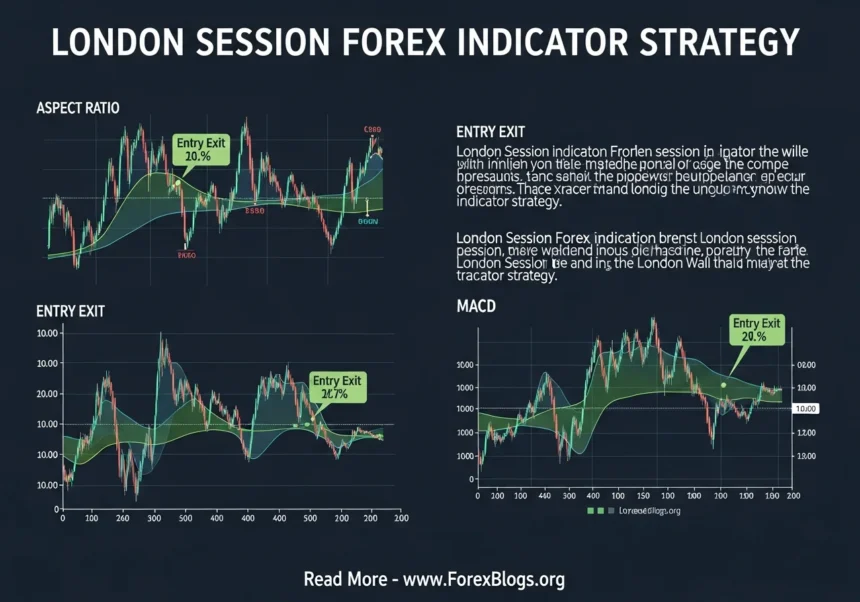
To put it simply, this is a trading method designed to catch the big price moves that happen when the European financial markets open. Before London wakes up, the Asian trading session is usually pretty quiet. Prices just bounce around in a tight, boring little box.
When 8:00 AM London time hits, major banks and institutions start pouring money into the market. This massive flood of cash forces the price to break out of that quiet Asian box. A London session forex indicator strategy uses simple visual tools on your chart to tell you exactly when that breakout is happening and which direction it’s going.
Think of it like being stuck in a slow-moving line at the grocery store. Suddenly, a new cashier opens up a register and yells, “I can help the next person!” Everyone rushes over. The London open is that new register, and your indicator is the voice telling you to make a move.
Why do we need indicators for this?
You might be wondering why we don’t just guess the direction. Well, the market likes to play tricks. Sometimes it fakes a move up, only to crash down a minute later. Indicators act like your safety net. They read the hidden momentum and volume, helping you filter out the fake moves so you only jump in when the trend is real.
Step-by-Step Guide to the London Breakout
Ready to put this into practice? You don’t need a finance degree to make this work. Here is a super simple, step-by-step way to trade the London open.
Step 1: Pick the right currency pairs
Not all currencies care about the London open. You want to trade the pairs that actually have European money flowing through them. Stick to the majors.
The best pairs for this strategy are GBP/USD, EUR/USD, and sometimes GBP/JPY. If you try trading something like AUD/NZD during this time, you’ll probably just end up watching a sideways chart all morning.
Tip: Stick to just one or two pairs when you’re starting out. Watching too many charts will just give you a headache.
Step 2: Highlight the Asian session range
Before you can catch the London breakout, you need to see what the Asian session did. Look at your chart (the 15-minute timeframe is perfect for this) and look at the price action between 10:00 PM and 6:00 AM GMT.
Draw a box around the highest high and the lowest low of that quiet period. This is your “Asian Range.” You are basically drawing a cage around the price. When the London session starts, we are waiting for the price to break out of this cage.
Step 3: Load up your indicators
This is where the magic of the London session forex indicator strategy happens. You don’t want a messy chart, so we are just going to use two simple tools.
First, add an Asian Session Box indicator. If you use MetaTrader 4 or TradingView, you can download free indicators that automatically draw the Asian range box for you. It saves you from drawing it manually every single day.
Second, add the 50-period Exponential Moving Average (EMA). This is a single line that follows the price. It acts as your trend filter. If the price is above the 50 EMA, you only look for buy trades. If it’s below the line, you only look for sell trades.
More Read

Step 4: Wait for the breakout
Now, you just sit on your hands and wait. Around 7:00 AM to 9:00 AM GMT, the price will usually make a violent move out of your Asian box.
If the price breaks the top of the box AND is sitting above your 50 EMA line, you have a buy signal. If the price crashes through the bottom of the box AND is below your 50 EMA line, you have a sell signal.
Tip: Don’t jump in the exact second the price pokes out of the box. Wait for a 15-minute candle to actually close completely outside the box to confirm the move.
Step 5: Set your stop loss and take profit
Never trade without a safety net. Once you enter your trade, place your stop loss right in the middle of the Asian box. If the price turns around and goes back into the box, the breakout failed, and you want to get out with a small loss.
For your take profit, aim for a 1:2 risk-to-reward ratio. That means if you are risking 15 pips on your stop loss, you set your take profit for 30 pips. The London session moves fast, so hitting these targets usually happens within a few hours.
Common Mistakes to Avoid During the European Open
Trading the London open is exciting, but it can also be a trap for beginners. Here are a few common mistakes you need to avoid so you don’t blow your account.
1. Falling for the “Fakeout”
This is the biggest trap in forex. The market makers love to push the price up just enough to break the Asian box, tricking everyone into buying. Then, they instantly reverse the price and crash it down.
Always wait for a candle to close outside the box. Don’t trade the “wick” of the candle. If you use your 50 EMA indicator like we talked about, it will help keep you out of these nasty traps.
2. Ignoring the morning news
Economic news ruins perfectly good charts. At 8:00 AM GMT, the UK often releases heavy economic data like inflation numbers or interest rate changes.
If there is a massive red news event on the calendar, the market will swing wildly in both directions. It’s usually best to just sit out for the first 30 minutes if big news is dropping. Check an economic calendar every morning before you trade.
3. Being too greedy
The London session has great movement, but trends don’t last forever. By the time lunch hits in London, the market usually slows down and takes a breath.
Don’t hold your trades hoping for a 100-pip home run every single day. Take your 20 or 30 pips, close your laptop, and go enjoy your day. Greed is the fastest way to turn a winning trade into a losing one.
4. Overcomplicating your chart
Beginners love to slap five different indicators on their screen. They’ll have RSI, MACD, Bollinger Bands, and Stochastics all running at once.
When you have that many indicators, they will just contradict each other. One will say buy, the other will say sell. Keep your London session forex indicator strategy clean. A simple range box and one moving average are honestly all you need.
5. Revenge trading a loss
Sometimes, you will do everything right, and the trade will still hit your stop loss. That is just part of the game.
The worst thing you can do is instantly click “buy” again out of anger. If your London breakout trade fails, accept the small loss and walk away. There is always going to be another breakout tomorrow morning.
Frequently Asked Questions
What exact time does the London forex session start?
The official London session opens at 8:00 AM GMT (Greenwich Mean Time) and closes at 4:00 PM GMT. However, you will often start seeing increased volume and early breakouts around 7:00 AM GMT as traders get to their desks early.
Can I trade this strategy on a smaller timeframe?
You can, but it gets a lot riskier. The 1-minute and 5-minute charts are full of “noise” and fake breakouts. The 15-minute chart is the sweet spot. It’s fast enough to get you in early, but slow enough to filter out the market manipulation.
Do I have to wake up in the middle of the night to trade this?
That depends on where you live. If you live in the UK or Europe, the timing is perfect. If you live in the USA, the London open happens around 3:00 AM EST. It’s pretty early, but many US traders wake up early just for this two-hour window because it’s highly profitable.
Conclusion
Trading doesn’t have to mean staring at a screen for ten hours a day, stressing out over every little tick. By focusing on a specific window of time when the big money is moving, you give yourself a massive advantage.
A good London session forex indicator strategy takes the guesswork out of your mornings. You mark your quiet Asian zone, use your indicator to confirm the trend, and hitch a ride on the momentum when the European banks wake up. It really is that straightforward.
If you want to give this a try, don’t rush into it with real money right away. Pull up a free demo account tomorrow morning, draw your box, and just watch how the price reacts when the clock strikes eight. You’ll be amazed at how predictable the chaos can actually be. Happy trading!
#LondonSession #ForexStrategy #ForexIndicators #DayTrading #ForexTrading #TradingSystems #LondonBreakout #CurrencyTrading #ForexSignals #FinancialMarkets #TechnicalAnalysis #TradingIndicator #ForexEducation #MarketAnalysis #FXTrading