

If you spend more than five minutes reading financial news or looking at a brokerage account, you’ll come to the great divide: growth versus value. This is the oldest argument in the book. It’s also one of the most confusing things. Growth Stocks vs Value Stocks Explained
A lot of people see it as a choice between “the fun stuff” and “the boring stuff.” That’s a lazy way to think about it. In reality, these two groups are two different ways of thinking about how to make money. One is a bet on what a company could be in the future, and the other is a bet on what it is right now.
I have seen investors lose money because they were too set on one side or the other. You need to know exactly what’s under the hood of both in order to get around in the market.
The Growth Game: Buying the Future – Growth Stocks vs Value Stocks Explained
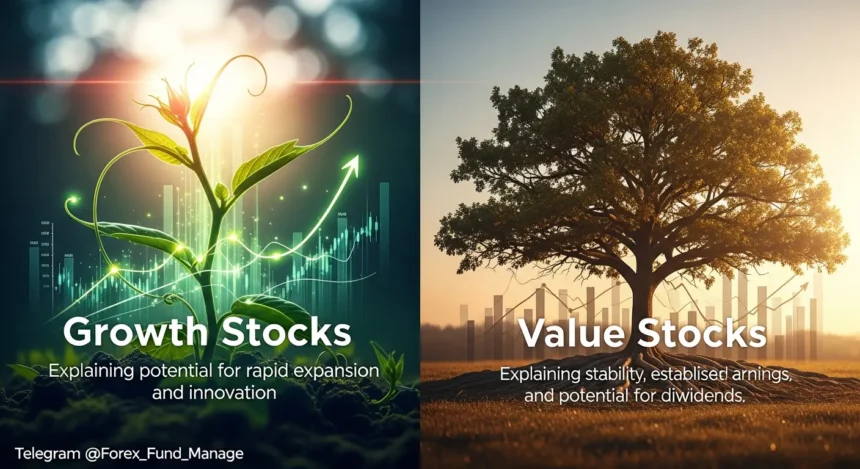
Growth stocks are like sprinters. These businesses are making more money and profits than the rest of the market. They don’t want to pay you a dividend today. They put all the money they make back into the furnace to keep the engine running.
When you buy a growth stock, you pay more than the stock is worth. The price-to-earnings (P/E) ratios you see might seem crazy to someone who is more traditional. You think that the company’s future dominance will make the price worth it, so you are doing this. Think about the big tech companies or the biotech companies that are working on a “moonshot” drug.
It’s clear what the risk is here. The market will punish a growth company if it doesn’t meet its goals, even by a small amount. Expectations are everything for growth stocks. When interest rates are low, these stocks usually do well because it’s easy to get money to grow. But what happens when rates go up? The math is different. Now, the future value of those far-off profits seems a lot smaller.
The Value Game: Digging Up the Diamonds in the Dirt
Value investing is a whole other thing. It’s the skill of finding businesses that the market has missed, misunderstood, or unfairly beaten down. These are usually well-established, mature businesses. They make things that people need, like banks, energy companies, and consumer goods.
Value investors don’t want to find the next big thing that will change the world. They want to get a good deal. They want to buy a stock for less than what it’s worth. The P/E ratio might be low, or the company might own a lot of real estate that the market hasn’t yet priced in.
A healthy dividend is often a sign of a value stock. These companies have extra money to give back to shareholders because they aren’t trying to double their size every year. It’s a more defensive stance. Value stocks tend to do better when the market is shaky because they have real, tangible earnings to fall back on.
What’s the risk? The “trap of value.” This happens when a stock is cheap for a good reason, like the company is going out of business or its industry is becoming less important. Just because something is cheap doesn’t mean it’s a good deal.
More Read

Why the Cycle is Important
We’ve seen decades where value beat growth and vice versa. It’s not often about which strategy is “better” on its own. It’s about the surroundings.
When the economy is doing well and money is coming in, investors become greedy. They want the 50% returns that growth stocks can give them. A utility company giving them a 3% dividend doesn’t matter to them. But when prices go up or a recession is on the way, people’s moods change. People are scared. They stop going after their dreams and start looking for safety. That’s when value really shows.
I think that most people who read general news fall for the hype and buy growth at the very top of the cycle. They see the headlines and want to be a part of it. Then, when the market goes back up, they sell at a loss and miss out on the recovery.## Getting rid of the binary
You don’t have to choose a team. Most long-term portfolios that do well actually use a mix. There is even a middle ground called GARP, which stands for “Growth at a Reasonable Price.” This is the sweet spot where you can find companies that are growing but aren’t worth a lot of money.
This is what really happened – Growth Stocks vs Value Stocks Explained
- Growth can lead to huge, life-changing gains, but the ride can make you sick.
- Value gives you stability and income, but you might feel like you’re watching paint dry while your neighbor’s tech stocks go up.
- Interest rates are the final judge. High rates are good for value, while low rates are good for growth.
Don’t just look at the stock price when you’re building a portfolio. Check out what you’re really buying. Are you buying a promise of tomorrow or the truth of today? There is a place for both. The trick is knowing how much of each you can keep when the weather changes.
When the market is doing well, it’s easy to be a growth investor. When the market turns red and you find out that the company you own hasn’t made a profit in five years, things get a lot harder. On the other hand, value investing takes a lot of patience that many people don’t have. You have to be okay with being “wrong” for a long time before the market finally agrees with you.
In the end, it’s all about finding the right balance. We shouldn’t try to find the “best” group. No matter what bucket they fall into, we should be looking for the best businesses. Don’t let the labels get in the way of the basics. No matter where it comes from, money is money. It could come from a big software company or a company that sells toothpaste.