


Most traders don’t blow accounts because they lack intelligence. They blow them because they trade without a plan — or worse, with a “plan” that only exists in their head. How to Build a Forex Trading Plan
- Start With Your Objective (Be Honest Here) – How to Build a Forex Trading Plan
- Define Your Market and Timeframe
- Set Clear Entry Criteria
- Risk Management: The Backbone of the Plan
- Define Exit Rules (Before You Enter) – How to Build a Forex Trading Plan
- Build a Review Process
- Keep It Simple Enough to Follow – How to Build a Forex Trading Plan
- The Real Purpose of a Trading Plan
I’ve been there.
You open the charts with a general idea. You look for something that “feels right.” You justify entries on the fly. When a trade works, you call it skill. When it fails, you call it bad luck. Repeat that cycle a few dozen times and you start realizing something uncomfortable:
You’re improvising with money.
A Forex trading plan is what separates structured trading from emotional gambling. And no, it doesn’t have to be a 50-page document filled with technical jargon. It just needs to be clear enough that you can follow it when pressure rises — because pressure will rise.
Let’s build this properly.
Start With Your Objective (Be Honest Here) – How to Build a Forex Trading Plan
Before you define entries or indicators, ask yourself something simple:
What am I actually trying to achieve?
Is this a side income? Long-term capital growth? A path toward full-time trading? The answer changes everything — your risk tolerance, your time horizon, even your strategy selection.
If you’re trading around a full-time job, day trading five-minute charts may not make sense. If you’re aiming for steady growth, doubling your account every month shouldn’t be part of the blueprint.
Your goal sets the tone. Without it, you’re just reacting to price movement.
And markets punish reactive behavior.
Define Your Market and Timeframe
Clarity reduces confusion.
Choose which currency pairs you’ll focus on. You don’t need twenty charts open. In fact, that often creates noise. Many experienced traders specialize in just a handful of pairs — they learn their behavior, volatility patterns, and session characteristics.
Then decide your timeframe.
Are you a scalper looking for quick intraday moves? A swing trader holding positions for days? Your lifestyle matters here. So does your personality. Some traders thrive on fast decision-making. Others perform better with patience and distance from the screen.
Trying to trade a style that doesn’t match your temperament leads to friction. And friction leads to mistakes.
Set Clear Entry Criteria
This is where most trading plans fall apart.
“Enter on strong momentum” isn’t a rule. It’s an interpretation.
You need something measurable. For example:
- Break and retest of a key level
- Moving average crossover with trend confirmation
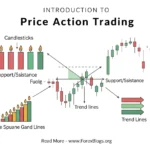
- Specific candlestick pattern at support or resistance
Whatever you choose, write it down in concrete terms.
Ask yourself: could someone else follow this rule exactly as written?
If the answer is no, it’s too vague.
Your entry criteria should remove as much guesswork as possible. Not all of it — trading isn’t mechanical perfection — but enough to reduce emotional interference.
More Read

Risk Management: The Backbone of the Plan
If your trading plan has one section that must be airtight, it’s risk management.
Decide in advance:
- How much you risk per trade (1–2% is common for many traders)
- Your maximum daily loss
- Your maximum weekly drawdown
And stick to it.
This is where discipline becomes visible.
You can have a mediocre strategy with strong risk control and survive long enough to refine it. But a great strategy with poor risk management? That won’t last.
I’ve seen traders with solid win rates wipe out months of gains in one aggressive session because they abandoned their risk limits after a losing streak.
That’s not strategy failure. That’s plan failure.
Define Exit Rules (Before You Enter) – How to Build a Forex Trading Plan
Exits are emotional hotspots.
If you don’t predefine your stop-loss and take-profit, your brain will negotiate with the market mid-trade. And the market always negotiates harder.
Your plan should answer:
- Where is my stop-loss placed and why?
- What is my minimum risk-to-reward ratio?
- Under what conditions will I trail stops or close early?
When exits are planned ahead of time, trading becomes execution rather than decision-making under stress.
And that shift changes everything.
Build a Review Process
A trading plan isn’t static. It evolves — but only if you track performance honestly.
Keep a trading journal. Record not just entries and exits, but emotions, context, mistakes, adjustments. Patterns reveal themselves over time.
Maybe you perform better during the London session than New York. Maybe your losses cluster around overtrading days. Maybe certain setups outperform others.
Without review, you’re guessing.
With review, you’re improving.
Keep It Simple Enough to Follow – How to Build a Forex Trading Plan
Here’s a mistake I see often: overcomplication.
Traders build elaborate plans with layers of indicators, filters, correlations, and conditions. On paper, it looks impressive. In real time, it becomes overwhelming.
A good Forex trading plan should feel structured but manageable. You should be able to glance at your rules and know exactly what to do.
If your plan requires constant interpretation, you’ll default to emotion when things get messy.
Simplicity isn’t weakness. It’s clarity.
The Real Purpose of a Trading Plan
People think a trading plan guarantees profits.
It doesn’t.
What it guarantees — if followed — is consistency of behavior. And consistent behavior produces measurable results. Measurable results can be improved.
Without a plan, every trade feels isolated. With a plan, each trade becomes part of a larger system.
And that’s the shift from gambling to professional thinking.
You won’t follow your plan perfectly at first. Nobody does. But every time you catch yourself deviating and return to structure, you strengthen discipline.
Over time, the plan stops feeling restrictive. It starts feeling stabilizing.
And when volatility spikes, when emotions surge, when temptation whispers to override your rules — that’s when you’ll be glad it exists.
Because in trading, freedom doesn’t come from doing whatever you want.
It comes from knowing exactly what you will — and won’t — do.