


There’s a specific kind of exhaustion that comes from staring at EUR/USD charts at three in the morning, waiting for a setup that might never happen. If you’ve been in this game for more than a week, you probably know exactly what I’m talking about. Forex Trading Investment Guide for New Investors
Forex isn’t just about numbers or economics. It’s a psychological thresher.
When people ask me how to start investing in foreign exchange, they usually expect me to talk about pip values, ask and bid spreads, or how to read a candlestick pattern. And sure, we can get to that. But if you want to actually survive—and let’s be honest, survival is the first goal here—we need to talk about what actually happens when you put real money on the line.
The first thing you have to accept is that the market does not care about you. It doesn’t care about your rent, your goals, or that you’ve done three hours of technical analysis suggesting the British Pound has to go up. The market is a massive, chaotic ocean of liquidity, and you are essentially trying to surf a tsunami on an ironing board.
The Leverage Trap – Forex Trading Investment Guide for New Investors
Let’s address the flashy numbers first. You’ll see brokers offering 1:100, 1:500, or even 1:1000 leverage. To a new investor, this looks like a golden ticket. You think, “Great, I can put down $100 and control $50,000 worth of currency. I’ll be rich by Tuesday.”
Here is the cold reality: Leverage is the primary reason new traders blow up their accounts. I’ve seen it happen more times than I can count.
When you are highly leveraged, a tiny ripple in price against your position doesn’t just scratch you; it decapitates your account. You have to understand that volatility is constant. If you are trading with high leverage, you are essentially demanding that the market moves in your favor immediately, with zero wiggle room. The market rarely obliges.
If you’re starting out, ignore the high leverage offers. Treat them like radioactive waste. Stick to effective leverage of maybe 1:10 or 1:20 regarding your actual account size. It feels boring. It feels slow. But it keeps you in the game long enough to learn how to actually trade.
The Search for the Holy Grail
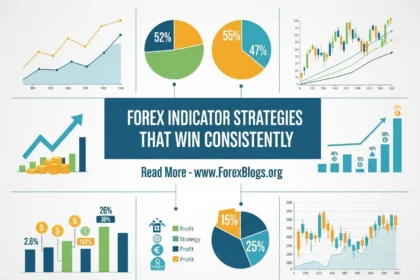
I wasted about two years of my life looking for the “perfect” system. I’m guessing you might be in that phase right now. You try a Moving Average Crossover strategy, lose three trades in a row, and decide it’s garbage. Then you switch to RSI divergence. Then you buy some guru’s proprietary indicator that paints green arrows on the chart.
Here’s the secret experienced traders know: The strategy barely matters.
I know that sounds ridiculous, but hear me out. You can give a losing trader a brilliant strategy, and they will still lose money because they lack discipline. You can give a winning trader a mediocre strategy, and they will squeeze a profit out of it because they understand risk management.
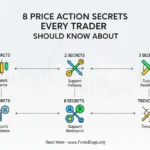
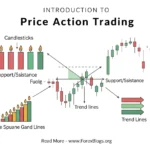
Stop jumping from system to system. Pick one approach that makes logical sense to you—whether it’s price action, supply and demand zones, or fundamental flows—and stick to it for six months. You need to learn the nuance of one tool, not the basics of twenty.
More Read

Managing the Bleed
Trading is largely an exercise in risk management. That’s it. That’s the job. You aren’t in the business of predicting the future; you are in the business of managing probability and exposure.
One of the hardest lessons to learn is that you can be right about the direction and still lose money. You might short the Yen, watching it spike up and hit your stop loss, only to watch it collapse 200 pips in your direction five minutes later.
It hurts. It makes you want to smash your keyboard.
But this is where position sizing saves you. If you risk 10% of your account on a single trade, five bad trades leave you with half your money gone. Do you know how hard it is to make 100% returns just to get back to breakeven? It’s nearly impossible for a rookie.
Risk 1% or 2% per trade. If you lose, it’s a scratch. It’s the cost of doing business, like a restaurant buying food that spoils. It’s not a personal failure. If you can detach your ego from the money, you have a shot at this.
Fundamental Awareness
You don’t need to be an economist to trade forex, but you can’t have your head in the sand either. Currencies move because of interest rates and central bank policies. That is the engine. Technical analysis is just the GPS.
If the US Federal Reserve is hiking rates and the Bank of Japan is keeping them negative, the USD/JPY pair has a fundamental reason to go up. Technical patterns that align with that fundamental picture are always going to be higher probability than those fighting it.
I always tell new investors to keep an eye on the economic calendar. You don’t necessarily need to trade the news—in fact, trading during Non-Farm Payrolls (NFP) or CPI releases is usually just gambling due to the slippage and whipsawing spreads—but you need to know when the bus is coming so you don’t get run over while standing in the middle of the street.
The Loneliness of the Long-Distance Trader – Forex Trading Investment Guide for New Investors
Nobody talks about the isolation. Trading is a solitary endeavor. When you win, nobody in your real life really understands why it was hard. When you lose, nobody understands why it hurts so much. You can’t exactly complain to your spouse that you lost the mortgage payment because the European Central Bank president made a hawkish comment during a press conference.
You need to build a mental fortress. You have to get to a point where a winning trade doesn’t make you feel like a god, and a losing trade doesn’t make you feel like a failure. Emotional neutrality is the superpower.
The guys you see on social media posing with rented Lamborghinis and showing screenshots of 1000% gains? Ignore them. They are selling a dream, not trading the markets. Real trading is boring. It’s waiting. It’s discipline. It’s staring at a chart for four hours, realizing there is no trade to be made, and closing the laptop.
Doing nothing is a trading position. Often, it’s the best one.
If you are going to invest your time and capital here, treat it like a business, not a casino. Protect your capital as if your life depends on it, because in this arena, capital is your oxygen. Once it’s gone, you can’t breathe.
Take it slow. The market will still be there tomorrow. Will you?