


There’s a specific kind of silence that hits a trading desk right before a major central bank announcement or a surprise geopolitical headline. You know the feeling. The tick chart slows down, the spread widens just a fraction, and you can almost hear the algorithms holding their breath. Forex Trading Investment Opportunities in Volatile Markets
- The Shift in Market Logic – Forex Trading Investment Opportunities in Volatile Markets
- Sizing Down to Survive
- The Flight to Safety (and the Carry Unwind)
- The Psychology of the Fast Market – Forex Trading Investment Opportunities in Volatile Markets
- The News Trading Trap
- Embracing the Chaos – Forex Trading Investment Opportunities in Volatile Markets
Then, the chaos hits.
For a lot of new traders, volatility is the boogeyman. It’s the thing that hunts their stop losses and blows up their accounts. But if you’ve been in this game long enough to have a few scars, you look at a volatile market differently. You stop seeing chaos and start seeing liquidity. You realize that while a flat market is safe, it’s also dead money. Price has to move for us to get paid.
However, trading high-volatility environments isn’t just about “being brave.” It’s about changing your entire mechanical approach. You can’t drive a Ferrari on an icy road the same way you drive it on dry asphalt. The car is the same, but the physics have changed.
The Shift in Market Logic – Forex Trading Investment Opportunities in Volatile Markets
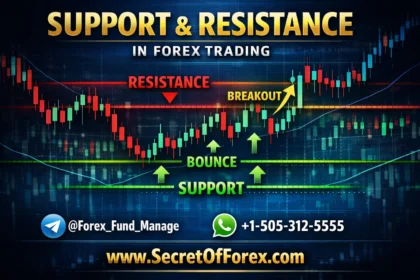
When the VIX spikes or the currency volatility indices start flashing red, the first thing to go out the window is standard technical respect. Support and resistance lines that held beautifully during the Asian session will get sliced through like butter during a volatile US overlap.
Why? Because in high volatility, price isn’t seeking efficient value; it’s seeking liquidity.
During these periods, you’ll see “whipsaws”—violent moves up to take out buy stops, followed immediately by a crash to take out sell stops. If you are trading with tight stops based on a quiet market structure, you are just providing liquidity for the big players. You’re the fuel.
The opportunity here lies in fading the extremes or waiting for the dust to settle. One of my favorite plays in a jagged market is waiting for the “flush.” Let everyone else panic sell. Wait for that candle that looks absurdly long, the one that extends way outside the Bollinger Bands or creates a massive divergence on the RSI. That’s usually where the institutional orders are sitting, waiting to scoop up cheap lots. You don’t step in front of the train; you wait for it to hit the bumper at the end of the line.
Sizing Down to Survive
Here is the paradox that took me three blown accounts to learn: To make more money in volatile markets, you often have to trade smaller.
It sounds counterintuitive. If the market is moving 100 pips instead of 20, shouldn’t I be aggressive? No. Because to survive a 100-pip swing, your stop loss needs to be three times wider than usual. If you keep your standard lot size and triple your stop distance, you are tripling your risk. That is reckless.
The professional move is to cut your position size in half (or even a quarter) and double your breathing room. This allows you to stay in the trade through the noise. The profit potential remains high because the magnitude of the move is so much greater. You catch a 150-pip run with half leverage, and you’ve made a week’s worth of profit in an hour, all while keeping your risk of ruin low.
More Read

The Flight to Safety (and the Carry Unwind)
When fear grips the market, correlations tighten. Everything starts moving together. Stocks drop, oil drops, and capital flees to the “safe havens.”
Historically, this has been the US Dollar (USD), the Japanese Yen (JPY), and the Swiss Franc (CHF). But you have to be careful with the Yen these days.
Trading the “Carry Trade Unwind” is one of the most explosive opportunities in forex. In calm times, funds borrow cheap Yen to buy higher-yielding currencies (like the Australian Dollar or Mexican Peso). When volatility hits, risk managers scream “sell,” and everyone rushes to pay back those Yen loans.
This causes pairs like AUD/JPY or GBP/JPY to collapse vertically. If you catch a carry unwind, you aren’t just trading a technical breakdown; you are trading a rush for the exit door. The moves are fast, violent, and incredibly profitable if you are on the right side. Just don’t try to catch the falling knife on the way down. Let it bounce, then short the rally.
The Psychology of the Fast Market – Forex Trading Investment Opportunities in Volatile Markets
We have to talk about your head, because that’s usually what breaks first.
Volatile markets induce a specific type of FOMO (Fear Of Missing Out). You see a candle shoot up, and your brain screams, “Get in now or you’ll miss it!” So you market buy. By the time your order fills—because slippage in volatile markets is real and it hurts—the price is already retracing. Now you’re underwater instantly.
You have to develop the discipline to be a sniper, not a machine gunner. High volatility means plenty of buses are coming. If you miss the entry on the EUR/USD breakout, don’t chase it. Look at the cross pairs. Look at EUR/JPY. Is there a lagging setup there?
Also, accept that you will be wrong. In a trending, low-vol market, you can be a little sloppy and get away with it. In a high-vol market, if you are wrong, the market will let you know immediately and painfully. The trick is to accept the loss instantly. The “hope trade”—holding a losing position praying for a reversal—is a death sentence when the ATR (Average True Range) doubles.
The News Trading Trap
There is a temptation to trade the news directly. The NFP number drops, CPI data comes out hot, and you want to click the button.
Don’t.
Unless you have an institutional-grade terminal and a direct fiber line to the exchange, you are slower than the machines. The initial spike is almost always algorithmic noise.
The real money is made in the “reaction to the reaction.” Let’s say US inflation comes in hot. The dollar spikes up immediately. But then, ten minutes later, you notice the rally stalling. Price can’t break the high. It starts to drift. This is where the human traders are stepping in, fading the algo-spike, realizing that maybe the market overreacted. This secondary move is often cleaner, smoother, and easier to manage than the initial explosion.
Embracing the Chaos – Forex Trading Investment Opportunities in Volatile Markets
Ultimately, volatility is the only reason we are here. If prices didn’t change, there would be no trading. But engaging with a volatile market requires a shift from prediction to reaction. You stop trying to guess where the market will go, and you start managing your exposure to where the market is going right now.
It requires wider stops, smaller size, and a complete lack of ego. The market is screaming; you don’t need to scream back. You just need to listen to what the tape is telling you.
Sometimes the best trade in a hyper-volatile market is to sit on your hands for the first hour of the session. Cash is a position, too. And usually, the most profitable opportunities appear right after the amateurs have been washed out of theirs.