


Forex trading isn’t a hobby. If you treat it like one, it’ll pay you like a hobby—or worse, it’ll bankrupt you like an expensive addiction. Most people get into the currency markets because they’ve seen an ad showing someone on a beach with a laptop. I’m here to tell you that’s a fantasy. The reality is a high-stakes environment where you’re competing against multi-billion dollar algorithms and institutional banks. Forex Trading Investment Strategies for Consistent Profits
To survive, let alone profit, you need more than a “feeling” about the Euro. You need a cold, calculated approach. Consistent profit in Forex doesn’t come from a secret indicator or a magical software package. It comes from three things: risk management, a proven strategy, and the psychological discipline to stick to the plan when everything is going wrong.
The Foundation: Risk is Everything – Forex Trading Investment Strategies for Consistent Profits
Before we talk about how to make money, we have to talk about how not to lose it. In this business, your capital is your inventory. If you run out of inventory, you’re out of business.
Most retail traders fail because they over-leverage. They have $2,000 in an account and they try to trade standard lots. One bad move and half their account is gone. Professional traders rarely risk more than 1% or 2% of their total account balance on a single trade. This means you’d have to lose 50 times in a row to go bust.
It sounds boring, but that’s the point. If your heart is racing every time you click “buy,” you’re trading too big. You should be able to walk away from your screen and eat dinner without worrying about a 50-pip move. If you can’t do that, you aren’t trading; you’re gambling.
Strategy 1: Price Action and Market Structure
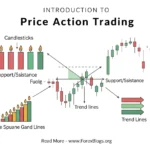
Forget the “spaghetti charts” filled with twenty different overlapping indicators. The most successful traders I know look at clean charts. They focus on price action.
Price action is the study of how the market moves in relation to historical levels. You’re looking for patterns—not because they’re mystical, but because they represent human psychology in real-time.
- Support and Resistance: These are the floor and the ceiling. When the price hits a level and bounces back three times, the market is telling you something.
- Trend Following: There’s an old saying: “The trend is your friend until the end.” It’s a cliché for a reason. Trying to pick the “top” of a rising market is a great way to lose money. Professionals wait for the market to establish a direction—higher highs and higher lows—and then they look for a pullback to enter.
More Read

Strategy 2: The Carry Trade
This is a strategy used by the big boys, and it’s remarkably simple. In the Forex world, every currency has an interest rate attached to it, set by its central bank. The “carry trade” involves selling a currency with a low interest rate and buying one with a high interest rate.
While you hold that position, you earn the interest differential every single day. This is called “swap.” For example, if the Australian Dollar has a 4% interest rate and the Japanese Yen is at 0%, you get paid to hold that pair. You aren’t just looking for price appreciation; you’re getting paid a dividend to wait. It requires patience and a long-term outlook, but it’s one of the few ways to create a “passive” stream of income in the currency markets.
Strategy 3: News and Fundamentals
You can’t trade in a vacuum. The Forex market is essentially a scoreboard for global economies. When the Federal Reserve hints at raising interest rates, the US Dollar usually gets stronger. When a country’s inflation data comes in higher than expected, its currency will react.
Consistent traders keep an economic calendar on their desk. They don’t necessarily “trade the news”—which is incredibly risky due to volatility—but they use the news to form a “bias.” If the US economy is booming and the European economy is stagnant, your bias should be to look for opportunities to buy the USD against the EUR. Don’t fight the macro reality.
The Psychological Gap
I’ve seen traders with brilliant strategies fail because they couldn’t control their emotions. There’s a specific kind of pain that comes with a losing trade, and the human brain is wired to avoid that pain.
This leads to “revenge trading”—trying to win back what you lost by taking a bigger, riskier trade immediately. Or it leads to “moving your stop loss,” where you let a small loss turn into a catastrophic one because you’re hoping the market will turn around. It won’t. Or if it does, it’ll happen right after you’re wiped out.
The market doesn’t care about your mortgage, your ego, or your “belief” that the Pound is undervalued. It goes where it goes.
The Bottom Line – Forex Trading Investment Strategies for Consistent Profits
Consistent profit isn’t about being right 90% of the time. In fact, many professional traders are only right about 50% of the time. The difference is that when they’re wrong, they lose a little. When they’re right, they win a lot.
Stop looking for the “Holy Grail.” It doesn’t exist. Instead, focus on building a repeatable process. Define your entry, define your exit, and for heaven’s sake, keep your position sizes small. If you can master your own impulses and respect the math of risk management, you’ve already beaten 90% of the people in this market.