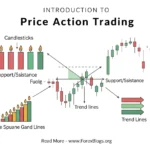



Most people get into Forex because they want the “lifestyle”—the beach, the laptop, the easy money. They usually end up losing their shirts within three months. If you’re serious about short-term scalping, you have to drop the fantasies and look at the charts for what they actually are: a battleground of supply and demand. Forex Price Action for Short-Term Scalping
Scalping isn’t about catching a 200-pip trend over a week. It’s about getting in, grabbing five to ten pips, and getting out before the market even realizes you were there. To do this consistently, you can’t rely on lagging indicators. If you’re waiting for a moving average crossover on a one-minute chart, you’re already too late. You need price action.
The Myth of the “Perfect” Indicator – Forex Price Action for Short-Term Scalping
Indicators are just math based on past prices. They tell you what happened, not what’s happening. In the world of scalping, that delay is lethal. Price action, however, is the raw data. It’s the immediate reflection of every buy and sell order hitting the market.
I’ve seen traders clutter their screens with so many oscillators and bands that they can’t even see the candles. That’s a mistake. When you’re scalping, your eyes should be on the levels and the candle shapes. That’s it. Everything else is just noise that slows down your decision-making.
Reading the Canvas
When I look at a chart, I’m looking for areas where the price “reacted” before. These aren’t just lines on a graph; they’re psychological battlegrounds.
- Support and Resistance: These aren’t brick walls. Think of them more like zones. If the price hits a level and bounces hard, that’s a sign that big players—the banks and hedge funds—are sitting there. As a scalper, you want to piggyback on their moves.
- Rejection Candles: Look for long wicks. A long wick sticking out of a resistance level tells a story. It says the buyers tried to push higher, got slapped down, and now the sellers are in control. That’s your cue.
- Momentum Bursts: Sometimes the market just moves. You see three or four solid green candles with almost no wicks. That’s a train you want to hop on, but only for a stop or two.
More Read

The Scalper’s Toolkit – Forex Price Action for Short-Term Scalping
You don’t need a complex strategy. You need a fast one. My approach focuses on three specific things: context, signal, and exit.
The context is the trend. Even on a five-minute chart, you need to know which way the wind is blowing. Don’t fight the momentum. If the trend is up, only look for buy signals. It’s simpler and keeps you on the right side of the volume.
The signal is usually an engulfing candle or a pin bar at a key level. It’s a clear “go” sign. If the candle closes and looks indecisive, I stay out. There’s no room for “maybe” in scalping.
The exit is the most important part. I don’t wait for a huge move. I have a target, and once the price hits it, I’m gone. I don’t care if it goes another fifty pips. Greed is what kills scalpers. They turn a winning scalp into a losing swing trade because they didn’t want to leave money on the table. Take your pips and run.
Risk is the Only Thing You Control
You can’t control the market. You can’t control the news. You can only control how much you’re willing to lose on a single trade.
In scalping, your stop-loss has to be tight. If the trade doesn’t go your way immediately, get out. The beauty of price action is that it tells you very quickly if you’re wrong. If you buy because of a bullish candle and the next candle immediately wipes it out, the “story” has changed. Don’t hope for a reversal. Hope is not a strategy. Just cut the loss and move to the next setup.
I generally suggest a risk-to-reward ratio that makes sense, but in scalping, sometimes it’s 1:1. That sounds risky to some, but if your win rate is high because you’re reading the price correctly, it works. The math doesn’t lie.
The Mental Game – Forex Price Action for Short-Term Scalping
Scalping is exhausting. It’s high-intensity. You’re making dozens of decisions in an hour. Most people can’t handle that for more than two hours a day. I certainly can’t. Your brain starts to see patterns that aren’t there. You start “revenge trading” after a loss.
The best scalpers I know have a “one and done” or a “three strikes” rule. If they lose three trades in a row, they shut the laptop. They don’t try to “win it back.” The market doesn’t owe you anything.
It’s about discipline. It’s about sitting on your hands for forty minutes and then acting with total conviction when the setup appears. If you can’t do that, you aren’t a scalper; you’re a gambler. And the house always wins against gamblers.
Stick to the price. Watch the candles. Keep it simple. That’s how you survive in this game.