

Have you ever bought a stock or crypto because it was climbing rapidly, only to watch it crash the second you clicked “buy”? Yeah, we’ve all been there, and it’s incredibly frustrating. You think you’ve finally caught a massive wave, but it turns out to be a complete fakeout. Best Indicator for Trend Confirmation
That’s exactly why finding the best indicator for trend confirmation is such a massive game-changer for new traders. Instead of guessing where the market is going based on gut feelings, you can use simple tools to prove a trend is real. By the end of this guide, you’ll know exactly how to stop risking your hard-earned cash on false breakouts and start trading with confidence.
What is Trend Confirmation?
Before we dive into the charts, let’s break down what trend confirmation actually means. In simple terms, it’s a way of double-checking the market’s true direction before you risk your money.
Think of it like checking the weather forecast before a long road trip. If you look outside and see a single dark cloud, you probably won’t cancel your plans right away. But if your weather app shows a massive storm rolling in, you know for sure it’s going to pour.
Trend confirmation is basically your trading weather app. When a stock price starts moving up (an uptrend) or down (a downtrend), an indicator acts as your trusted second opinion. It tells you if the price move has real power behind it, or if it’s just a temporary blip that will reverse in five minutes.
There is a famous trading saying that goes, “the trend is your friend.” But honestly, that’s only true if you can actually prove the trend exists! Without proper confirmation, you aren’t really trading—you’re just gambling and hoping for the best.
Finding the Best Indicator for Trend Confirmation
When you first start looking for the best indicator for trend confirmation, you’ll quickly realize there are hundreds of options. It gets overwhelming fast. To keep things simple, let’s look at three of the top tools beginners use.
1. Moving Averages (SMA and EMA) Moving averages smooth out choppy price data to create a single flowing line on your chart. If the price is consistently above the line, you are in an uptrend. The Exponential Moving Average (EMA) is a fan favorite because it reacts quickly to recent price changes.
2. Average Directional Index (ADX) The ADX is a fantastic tool, but it works a bit differently than the others. It doesn’t actually tell you if the trend is going up or down. Instead, it measures the pure strength of the trend. If the ADX line crosses above 25, the current trend is considered strong enough to trade.
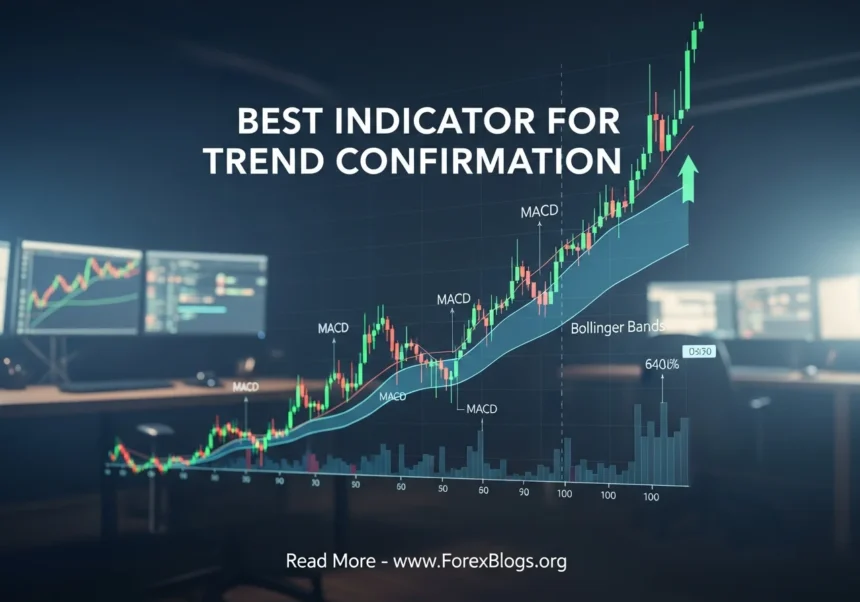
3. The MACD (Moving Average Convergence Divergence) While the other tools are great, the MACD usually takes the crown for beginners. It combines trend direction and trend momentum into one easy-to-read package. Because it gives you so much useful information at a single glance, many consider it the absolute best indicator for trend confirmation.
Step-by-Step Guide: How to Confirm a Trend
Let’s look at how to actually use the MACD to confirm market trends on your own charts. Don’t worry, setting this up is way easier than the long name makes it sound.
More Read

Step 1: Add the indicator to your chart Open up your trading platform (like TradingView or your broker’s app) and search for “MACD”. Click to add it to your screen. You’ll usually see it pop up in a separate box at the bottom of your chart. Tip: Just leave the default settings (usually 12, 26, 9) exactly as they are. They work perfectly fine for beginners.
Step 2: Identify the two main lines Look at the new box at the bottom of your screen. You’ll notice two lines squiggling around. One is the MACD line (often blue), and the other is the Signal line (often orange or red). The magic of trend confirmation happens when these two lines cross over each other.
Step 3: Spot the crossover If the blue line crosses above the orange line, that’s your bullish confirmation. It means an upward trend is likely building strength. On the flip side, if the blue line crosses below the orange line, that’s a bearish confirmation, warning you of a downtrend.
Step 4: Check the zero line for safety Right in the middle of the MACD tool is a straight, invisible boundary marked “0”. For extra safety, wait until both of your squiggly lines cross above this zero line. When that happens, the upward trend is officially confirmed and much safer to trade. Tip: Never place a trade just because some lines crossed. Always make sure the actual price candles on your chart are moving in the same direction!
Common Mistakes to Avoid
Even with the best indicator for trend confirmation on your side, it’s super easy to slip up. Here are a few common mistakes you should avoid when you’re just starting out:
1. Relying on just one single tool No indicator is perfect. If you only look at the MACD and completely ignore basic things like support and resistance levels, you’ll eventually get trapped. Always use a mix of basic price action and your chosen indicator.
2. Trying to trade in a choppy market Trend indicators are absolutely terrible when the market is moving sideways. If the price is just bouncing up and down in a tight, boring range, your indicator lines will cross constantly. This creates false signals that will easily eat away at your account balance.
3. Jumping in too early A lot of beginners get hit with FOMO (Fear Of Missing Out) and jump into a trade the second they think a line is about to cross. Don’t do this! Always wait for the chart candle to officially close and for the cross to actually happen. Patience saves you money.
4. Ignoring the bigger picture If you’re looking at a 15-minute chart, take a quick peek at the 1-hour or daily chart first. If the overall daily trend is going down, buying on a tiny 15-minute uptrend is super risky. Always trade in the direction of the bigger, longer-term trend.
5. Forgetting to use a stop loss Even the most reliable trend confirmation indicator in the world will be wrong sometimes. The market is unpredictable. Always set a stop loss to protect your account if the trend suddenly reverses out of nowhere.
FAQs
Can I use the RSI for trend confirmation?
Yes, you definitely can! The Relative Strength Index (RSI) is a great tool. However, it’s generally better for spotting when a stock is overbought or oversold (meaning a reversal is coming). It isn’t always the best choice for confirming long, sustained trends.
What time frame works best for trend indicators?
For beginners, longer time frames like the 1-hour, 4-hour, or daily charts are much more reliable. Shorter time frames, like the 1-minute or 5-minute charts, have too much random price “noise” and will give you a lot of fake signals.
Is there a single indicator that guarantees a winning trade?
Nope, and anyone who tells you otherwise is probably trying to sell you a scammy trading course. Indicators are just helpful tools designed to tip the odds in your favor. They are not crystal balls.
Conclusion
Learning to read the market takes a bit of time and practice, but having the right tools in your corner makes a world of difference. By using a solid tool like the MACD, you can stop relying on wild guesses and start making smarter, data-driven decisions.
Remember, the best indicator for trend confirmation is simply the one you actually understand and feel comfortable using. Take it slow, practice on a free demo account first, and don’t rush the learning process. You’ve got this!
What indicator are you planning to test out on your next chart? Drop a comment below, or share this guide with a friend who is just starting their own trading journey
#TradingIndicators #TrendConfirmation #TechnicalAnalysis #StockMarket #ForexTrading #CryptoTrading #PriceAction #MarketTrends #TradingStrategy #InvestmentTips #DayTrading #SwingTrading #BestIndicator #FinancialMarkets #TrendTrading