


The foreign exchange market is a brutal teacher. Most people arrive at its gates because they saw an ad promising easy wealth or a “proven” system that generates passive income while they sleep. I’ll be blunt: that’s nonsense. Forex trading is a high-stakes profession that requires more discipline than most people possess. It’s the largest financial market in the world, moving trillions of dollars every single day, and it doesn’t care about your mortgage or your feelings.
If you’re serious about moving beyond the “get-rich-quick” fantasies, you need to understand that success in this arena is built on two pillars: choosing a broker that won’t rob you blind and mastering the psychological warfare of the charts.
The Broker Reality Check
You’ll find thousands of brokers online. Many of them are offshore operations designed to make it easy to deposit money and nearly impossible to withdraw it. I’ve seen too many beginners lose their entire stake not because of a bad trade, but because they picked a broker regulated by a country you couldn’t find on a map.
When you’re starting out, your first priority is safety. If a broker isn’t regulated by a top-tier authority—think the CFTC or NFA in the United States, or the FCA in the UK—don’t give them a dime.
Here’s who I’d actually trust with my capital:
- IG: They’re the heavyweights for a reason. They offer a massive range of pairs, and their platform is clean enough for a novice but deep enough for a pro. Their transparency on pricing is what sets them apart.
- OANDA: A long-standing favorite for US traders. They don’t have the flashy marketing of some newer apps, but they’re reliable. They offer “fractional” trading, which is great because it lets you trade tiny amounts while you’re still learning.
- Interactive Brokers: This is for the person who wants to take this seriously. Their interface has a steep learning curve, but they provide professional-grade tools and some of the tightest spreads in the industry. It’s not “fun,” but it’s effective.
Stop Thinking About “Winning”
Beginners obsess over their win rate. They want a strategy that works 90% of the time. In reality, I know traders who are wrong 60% of the time but are still incredibly profitable. How? They manage their risk.
The biggest mistake you’ll make is over-leveraging. Leverage is a tool that lets you control a large position with a small amount of money. It’s a double-edged sword. Most brokers offer 50:1 or even 100:1 leverage. If you use all of it, a tiny move against you will wipe out your account before you can even blink. Treat leverage like a loaded gun—use it sparingly.
More Read

Tips for the Long Game
You don’t need to know everything to start, but you do need a plan. Here is how I’d suggest you approach the first six months:
- Trade a Demo Account, But Not for Too Long. You need to learn how the buttons work and how the market moves. But demo trading lacks the one thing that makes trading hard: real emotion. Spend a month on demo, then move to a small live account. You need skin in the game to learn how to control your fear.
- Stick to the “Majors.” Don’t try to trade the Turkish Lira or the Mexican Peso because you think the moves are bigger. They’re volatile and the “spread”—the cost of the trade—is high. Stick to the EUR/USD or the GBP/USD. They’re liquid, they’re predictable (as much as any market can be), and the costs are low.
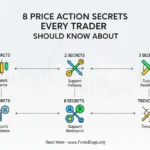
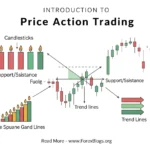
- Ignore the “Indicators” Trap. Your screen shouldn’t look like a Jackson Pollock painting. You don’t need five different colorful lines crossing each other to tell you what’s happening. Price is the only thing that matters. Learn to read raw price action—support, resistance, and trends. Everything else is just noise that lags behind the truth.
- Accept the Loss Before You Take the Trade. Every time I enter a position, I’ve already decided that the money I’m risking is gone. It’s the cost of doing business. If you’re sweating over a trade, your position size is too big.
The Psychological Wall
The hardest part isn’t the math; it’s the person in the mirror. You’ll experience “revenge trading”—the urge to immediately win back money after a loss. It’s a fast track to bankruptcy. You’ll also experience “FOMO,” jumping into a trade because the price is moving fast and you don’t want to miss the boat. Usually, by the time you jump in, the move is over.
Forex is a marathon, not a sprint. The goal of your first year shouldn’t be to double your money. It should be to not lose your money. If you can survive the first twelve months with your capital intact, you’re already ahead of 90% of the people who started at the same time as you.
Don’t look for shortcuts. They don’t exist here. Just focus on the process, keep your risk small, and stop listening to anyone who tells you this is easy. It’s the hardest way to make “easy” money there is.