


Have you ever checked your trading app and seen a sea of red, only to wonder, “Wait, what just happened?” You aren’t alone. One minute everything is calm, and the next, a single news report about inflation or jobs sends the whole market into a frenzy. It’s a bit like watching a calm ocean suddenly turn into a stormy mess because of a distant wind. Understanding how economic news impacts share prices in stock market is basically like learning how to read a weather map before you go sailing—it won’t stop the storm, but it’ll definitely help you keep your boat upright.
- What Exactly is Economic News?
- A Step-by-Step Guide to Watching the News Like a Pro
- 1. Keep an Eye on Interest Rates (The “Big Boss”)
- 2. Check the Inflation Reports (CPI)
- 3. Look at the Jobs Report
- 4. Watch the GDP (The Country’s Report Card)
- 5. Listen for “Forward Guidance”
- Common Mistakes Beginners Make with News
- Why Does the Market Sometimes React Differently?
- FAQs About Economic News and Stocks
- Conlusion
What Exactly is Economic News?
In the simplest terms, economic news is like a health check-up for the country’s finances. Imagine you’re running a small lemonade stand. If you hear that the price of lemons is going up, or that people in your neighborhood just got a raise and have more money to spend, that’s “economic news” for your business. You’d probably change your prices or buy more stock based on that info, right?
The stock market does the exact same thing, just on a massive, global scale. When we talk about how economic news impacts share prices in stock market, we’re looking at how data—like how many people have jobs or how much things cost at the grocery store—makes investors feel about the future. If the news suggests companies will make more money, stock prices usually go up. If it looks like a struggle is coming, prices often head south.
For example, if the government announces that everyone is spending more money at retail stores, investors think, “Hey, Apple and Walmart are going to have a great quarter!” Naturally, they start buying those shares, and the prices climb.
A Step-by-Step Guide to Watching the News Like a Pro
You don’t need a PhD in Economics to understand what’s going on. You just need to know which “clues” to look for. Here is a simple way to break down the madness.
1. Keep an Eye on Interest Rates (The “Big Boss”)
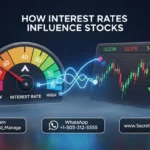
If there is one thing that moves the needle more than anything else, it’s interest rates. Usually decided by the Federal Reserve (or your country’s central bank), these rates determine how expensive it is to borrow money.
- The Logic: When rates are low, it’s cheap for companies to borrow money to grow. Investors love this. When rates go up, borrowing gets expensive, and people might spend less.
- The Reaction: Generally, when rates go up, share prices take a bit of a hit. When they stay low or drop, the market usually cheers.
2. Check the Inflation Reports (CPI)
You’ve probably heard the word “Inflation” a thousand times lately. The Consumer Price Index (CPI) is just a fancy way of saying “how much more expensive is my milk and gas today?”
- The Logic: High inflation means money doesn’t go as far. It also means the “Big Boss” (the central bank) might raise interest rates to cool things down.
- The Reaction: High inflation usually makes the stock market nervous. It signals that costs for companies are going up, which might eat into their profits.
3. Look at the Jobs Report
Every month, the government releases data on how many people found work. This is a huge piece of the puzzle in how economic news impacts share prices in stock market.
- The Logic: If more people have jobs, more people are spending money. That’s good for business!
- The Reaction: Usually, a strong jobs report is great for stocks. However—and here’s the tricky part—if the job market is too hot, it might cause inflation, which makes investors worry about interest rate hikes. It’s all a balancing act.
4. Watch the GDP (The Country’s Report Card)
Gross Domestic Product (GDP) is the total value of everything a country produces. It’s the ultimate report card.
- The Logic: A growing GDP means the economy is healthy. A shrinking GDP for two quarters in a row is what people call a “recession.”
- The Reaction: Steady growth is the “Goldilocks” zone for share prices—not too hot, not too cold.
5. Listen for “Forward Guidance”
Sometimes it’s not the data itself, but what the leaders say about the future. If the head of the Central Bank hints that they might cut rates soon, the market might rally even before it actually happens. This is because investors are always trying to guess what’s coming next.
More Read

Common Mistakes Beginners Make with News
It’s easy to get swept up in the drama of a 24-hour news cycle. Here are a few traps to avoid:
- Panic Selling on a Headline: Just because a headline looks scary doesn’t mean the world is ending. Often, the market “overreacts” in the first hour and then calms down by the afternoon. Don’t let a “breaking news” alert dictate your life savings.
- Ignoring the “Priced In” Factor: Sometimes, “bad” news comes out, and the market actually goes up. Why? Because investors already expected the news to be bad, and it wasn’t quite as bad as they feared. This is what pros call “priced in.”
- Thinking News is the Only Factor: While economic news is huge, company-specific news (like a CEO leaving or a new product launch) still matters. Don’t lose sight of the individual company because you’re too focused on the national economy.
- Trying to Time the Market: Unless you have a crystal ball, trying to buy or sell the exact second a news report drops is a losing game. High-speed computers usually beat humans to those trades anyway.
Why Does the Market Sometimes React Differently?
This is where it gets a bit weird. Have you ever seen a report that says “Unemployment is up,” and then the stock market goes up? It feels totally backwards.
Here’s why that happens: If the economy looks a little weak (like people losing jobs), investors might think, “Oh, the Central Bank will probably lower interest rates now to help out!” Since lower rates are generally good for stocks, the market rallies on “bad” news.
It’s a bit of a psychological game. You aren’t just watching the news; you’re watching how thousands of other people think about the news. That’s a big part of how economic news impacts share prices in stock market. It’s as much about human emotion as it is about hard math.
FAQs About Economic News and Stocks
Q: Does every piece of economic news change my stock prices? Not necessarily. Small reports might cause a “blip,” but the big ones—like Interest Rates, Inflation (CPI), and Employment—are the ones that really move the needle. If you’re a long-term investor, the daily noise matters much less than the big trends.
Q: Where can I find this news without getting overwhelmed? You don’t need a Bloomberg terminal. Simple sites like Yahoo Finance, Google Finance, or even the business section of a major newspaper will give you the highlights. Just look for the “Economic Calendar” on these sites to see when the big reports are coming out.
Q: Should I change my investment strategy based on the news? For most people, the answer is no. If you’re investing for retirement 20 years from now, a bad inflation report this Tuesday won’t matter much in the long run. It’s usually better to have a solid plan and stick to it rather than chasing every headline.
Conlusion
Understanding how economic news impacts share prices in stock market is really about seeing the “big picture.” It’s easy to get lost in the numbers and the talking heads on TV, but remember: the market is just a giant group of people trying to figure out what the future looks like.
When the news is good, people feel confident and buy. When the news is confusing or bad, people get cautious and sell. By learning what these reports actually mean, you can stay calm while everyone else is panicking.
Next time you see a big move in your portfolio, don’t just stare at the numbers. Go check the headlines. Did the Fed speak? Did the inflation numbers come out? Once you start connecting those dots, the stock market feels a lot less like a casino and a lot more like a logic puzzle.
So, keep an eye on the “weather,” but don’t let every little rain cloud keep you from staying the course with your investments. Happy watching!
#SharePricesInStockMarket #StockMarket #EconomicNews #Investing #Finance #MarketAnalysis #StockMarketTips #TradingStrategy #Economics #FinancialLiteracy #MarketTrends #InvestmentStrategy #Economy #StockPrices #FinancialNews