

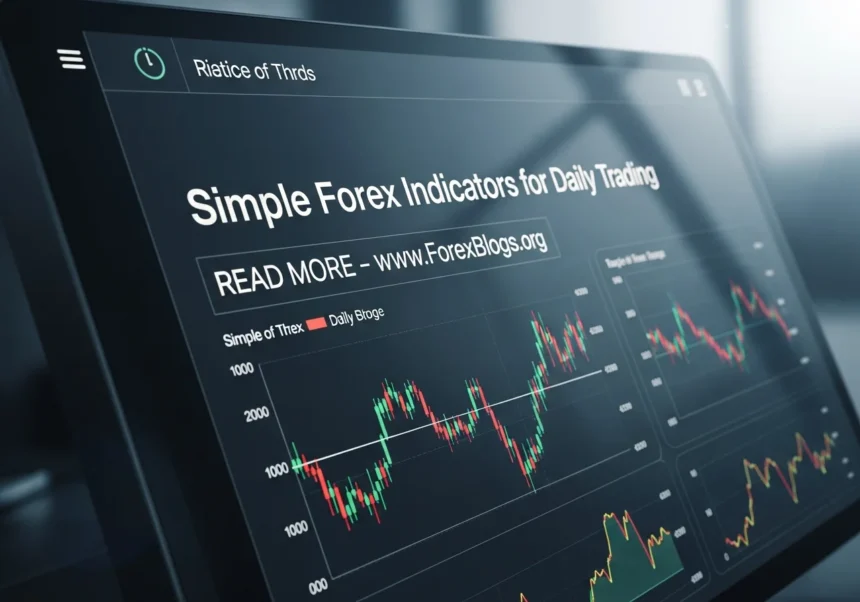
Ever opened a trading chart and felt like you were staring at the Matrix? You’re definitely not alone. When I first started trading, my screen was a messy spaghetti bowl of lines, colors, and numbers that just gave me a headache. I thought more data meant better trades, but it honestly just made me freeze up. The truth is, relying on simple forex indicators is the easiest way to make your daily trading less stressful and a lot more effective. Let’s break down exactly how to use them without needing a finance degree. Simple Forex Indicators for Daily Trading
What Are Simple Forex Indicators?
Think of simple forex indicators like the dashboard on your car. You don’t need to know how the engine works to drive, right? You just need the speedometer to tell you how fast you’re going and the gas gauge to show when you’re running empty.
In trading, indicators do the exact same thing for currency prices. They take past price data—like where a currency opened, closed, and its highest or lowest points—and turn that math into easy-to-read visual lines on your chart.
Instead of guessing if the EUR/USD pair is going up or down, these tools give you a little visual nudge. They help you spot market trends, see if a currency pair is running out of steam, or figure out where to place your safety net.
The best part? You really only need a couple of them to build a solid daily routine.
Step-by-Step Guide: Setting Up Simple Forex Indicators
Ready to set up your charts? Here is how you can start using simple forex indicators for daily trading without getting overwhelmed.
Step 1: Choose your timeframe carefully If you are day trading, you don’t want to look at a monthly chart. That won’t help you catch daily moves. Stick to the 15-minute or 1-hour charts. These timeframes give you enough action to find trades, but filter out the crazy second-by-second noise.
Step 2: Start with a naked chart Before adding anything, just look at the raw price. Is the market moving from the bottom left of your screen to the top right? That’s an uptrend. Don’t clutter your screen with tools before you figure out what the actual price is doing.
Step 3: Add a Moving Average (MA) for direction The Moving Average is the absolute bread and butter of simple forex indicators. It literally just averages out the past prices and draws a smooth line across your screen. Tip: Try adding a 50-period Simple Moving Average. If the current price is hanging out above the line, only look for reasons to buy. If it’s below, look to sell. Easy, right?
Step 4: Bring in the RSI to measure momentum The Relative Strength Index (RSI) sits at the very bottom of your screen. It scores the market’s energy from 0 to 100. It helps you see if a move is getting exhausted. Tip: If the RSI goes over 70, the market might be “overbought” (too expensive right now). If it drops below 30, it might be “oversold” (on sale). Use this to time your entries so you don’t buy at the very top.
Step 5: Use the ATR to protect your money The Average True Range (ATR) tells you how wild the market is right now. It measures current volatility. This is your best friend for setting stop-losses. Tip: Look at the ATR number before you place a trade. If the ATR says the market is moving 20 pips an hour, don’t set a tight 5-pip stop loss. You’ll just get kicked out of the trade by normal market breathing.
Step 6: Wait for your tools to agree Don’t jump into a trade just because one indicator flashed a signal. Wait for your moving average to show a clear uptrend, and your RSI to show a safe entry point. When your tools agree with each other, that’s your green light to enter.
More Read

5 Common Mistakes When Using Trading Indicators
Even with the absolute easiest tools, beginners tend to trip up. Here are a few traps you should try to avoid when building your daily trading habits:
1. Turning your chart into a rainbow Adding ten different indicators won’t make you a more profitable trader. It just causes “analysis paralysis.” When five indicators say buy and five say sell, you won’t do anything. Stick to two or three max. Keep your chart clean.
2. Ignoring the actual price action Indicators always lag behind real-time price. If the price suddenly drops like a rock because of a major news event, don’t blindly hit “buy” just because your RSI says it’s oversold. Always respect what the actual price candles are doing first.
3. Changing your settings every single day Bouncing between a 14-period RSI today and a 20-period RSI tomorrow will just confuse you. There are no magic numbers. Pick standard settings (like the ones built into your trading platform) and stick with them long enough to see how they behave.
4. Believing indicators predict the future They really don’t. Simple forex indicators only summarize the past. Treat them as clues in a detective investigation, not a crystal ball. They tell you what is likely to happen, not what is guaranteed to happen.
5. Trading the indicator, not the trend If the overall market trend is aggressively going down, don’t try to place a buy trade just because one little indicator flashed a buy signal. Always zoom out, look at the big picture, and trade in the direction of the main trend.
Quick FAQs About Daily Trading Indicators
What is the best indicator for a total beginner?
The Simple Moving Average (SMA), hands down. It’s incredibly easy to read. If the price is above the line, you look for buying opportunities. If it’s below, you look to sell. It keeps your daily trading rules super straightforward.
Can I use just one indicator to trade?
You can, but it’s usually better to pair two that do different jobs. For example, use one for finding the trend direction (like a Moving Average) and use another for timing your entry (like the RSI).
Do these indicators work all the time?
Nope! No indicator is 100% accurate, no matter what someone on the internet tells you. You will still have losing trades. That is exactly why using a stop-loss on every single trade is completely non-negotiable.
Conclusion
Learning to trade currencies doesn’t mean you have to learn complicated math or stare at messy charts all day. By sticking to simple forex indicators, you keep your mind clear and your decisions sharp.
Remember, the goal isn’t to find a magical setup that never fails. It’s about finding a repeatable, boring routine that gives you a small edge over time. Trading should be simple, not stressful.
Why not open up a free demo trading account today? Throw a Moving Average and an RSI on your chart, and just watch how the price reacts to them. Practice makes perfect, and keeping things simple is the absolute best way to start your journey.
#ForexTrading #SimpleForexIndicators #DailyTrading #TradingStrategy #ForexAnalysis #TechnicalAnalysis #ForexEducation #TradingTips #DayTraderLife #FinancialMarkets #FXTrading #InvestingForBeginners #TradingIndicators #ForexSignals #SmartTrading